


Rubber-Backed Ceramic Impact Liner
Rubber-Backed Ceramic Impact Liner combines a dense alumina ceramic wear layer with a resilient rubber backing for bulk material handling areas exposed to impact and abrasion. The ceramic surface handles abrasive contact, while the rubber layer provides resilient support under repeated impact. The liner is used for transfer chutes, hoppers, bins and other material transfer areas where impact and sliding wear occur together.
Product Structure
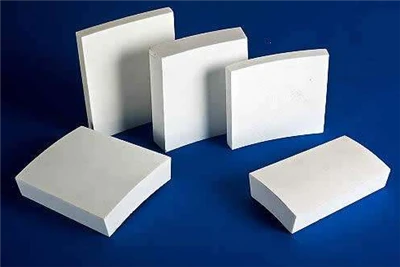
Alumina Ceramic Layer
The working surface uses alumina ceramic grades from 92% to 99% Al₂O₃. Grade and ceramic thickness are selected according to material size, wear intensity, impact conditions and available lining space.
Rubber Backing
The rubber layer provides resilient support beneath the ceramic tiles. Its role is to absorb part of the impact load and support the ceramic during repeated material loading.
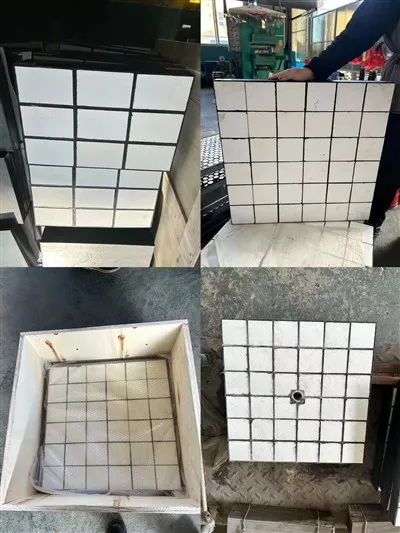
Composite Construction
Ceramic tiles are integrated with the rubber backing to form a flexible liner configuration. Tile shape, layout and panel dimensions can be matched to the lining area and installation method.
Where It Fits
Transfer Chutes
Suitable for transfer points where falling material produces direct impact before sliding across the wear surface.
Hoppers and Bins
Used on receiving surfaces exposed to repeated loading from abrasive bulk solids.
Impact Zones
Suitable for localized areas where impact energy and abrasive contact occur within the same lining section.
Key Selection Parameters
|
Grade |
Al₂O₃ |
Bulk Density |
Water Absorption |
Mohs Hardness |
Fracture Toughness |
Flexural Strength |
|
TW92 |
≥92% |
≥3.63 g/cm³ |
≤0.01% |
9 |
40 N/mm |
≥255 MPa |
|
TW95 |
≥95% |
≥3.68 g/cm³ |
≤0.01% |
9 |
42 N/mm |
≥275 MPa |
|
TW97 |
≥97% |
≥3.73 g/cm³ |
≤0.01% |
9 |
44 N/mm |
≥285 MPa |
|
TW99 |
≥99% |
≥3.83 g/cm³ |
≤0.01% |
9 |
48 N/mm |
≥300 MPa |
Product Advantages
Abrasion Control
The dense alumina ceramic surface provides a hard working layer for abrasive material flow and repeated sliding contact.
Impact Support
The resilient rubber backing provides compliant support beneath the ceramic when bulk material strikes the liner.
Modular Configuration
Individual ceramic tiles can be arranged into panels suited to flat, curved or segmented lining areas.
Application Matching
Ceramic grade, thickness, tile geometry and backing construction can be selected according to the actual wear pattern and installation space.
How to Select the Construction
Abrasive Flow
Material hardness, particle size, flow direction and contact frequency should be considered when selecting ceramic grade and thickness.
Repeated Impact
Drop height, lump size and impact angle determine the mechanical loading applied to the liner and should be reviewed together with the rubber backing.
Limited Space
Where installation clearance is restricted, ceramic thickness and backing thickness should be coordinated with the existing equipment dimensions.
Concentrated Loading
Areas receiving concentrated material impact require suitable support beneath the liner and an appropriate fixing arrangement.
Installation Considerations
Mounting Surface
The substrate should be clean, dry and structurally sound before installation. Surface preparation is important for consistent bonding.
Panel Layout
Joint positions should follow the equipment profile and maintenance access. Smaller sections can be used around high-wear areas or inspection points.
Fixing Method
Adhesive bonding or a combined fixing arrangement can be selected according to substrate condition, liner configuration, operating temperature and maintenance requirements.
Manufacturing & Quality Control
Ceramic Processing
Alumina powder is prepared, formed and sintered under controlled conditions. Smaller tiles can use dry pressing, while larger shapes can use cold isostatic pressing for more uniform density.
Material Inspection
Ceramic grades are evaluated by alumina content, density, hardness, water absorption, fracture toughness and flexural strength.
Finished Inspection
Finished tiles and composite liners are checked for dimensions, surface condition and visible defects before assembly and shipment. Batch documentation can be provided for specified material properties.
Specification for Enquiry
Provide the equipment type, lining location, available clearance and approximate lining area.
Material type, particle size, drop height, impact angle, flow rate and operating temperature help determine the required construction.
A dimensional drawing or marked-up layout helps confirm panel dimensions, tile arrangement, joints and fixing locations.
Required quantity and lining area help determine the production configuration and packing requirements.
FAQ
Q: What is a Rubber-Backed Ceramic Impact Liner?
A: It is a composite liner combining an alumina ceramic wear surface with a resilient rubber backing for areas exposed to impact and abrasive material flow.
Q: What alumina grades are available?
A: Alumina grades from 92% to 99% are available, with material properties defined for each grade.
Q: How is ceramic thickness selected?
A: Thickness is selected according to material particle size, impact conditions, wear intensity, available space and the supporting structure.
Q: Can the liner be made to drawing?
A: Yes. Panel dimensions, ceramic arrangement, thickness and fixing details can be specified according to the equipment layout.
Q: What information is required for specification?
A: Equipment dimensions, material type, particle size, drop height, impact angle, temperature, fixing method and required quantity provide the main information for specification review.
Q: Can material test data be provided?
A: Material property data can be provided for the specified ceramic grade to support technical review and purchasing documentation.
Hot Tags: rubber-backed ceramic impact liner, China rubber-backed ceramic impact liner manufacturers, suppliers, factory, Removable Ceramic Conveyor Linings
You Might Also Like



Send Inquiry