


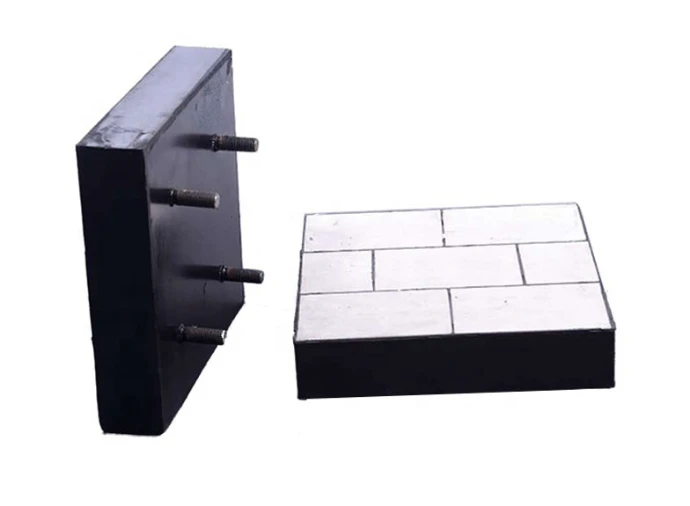
Weldable Ceramic Impact Liner
Weldable Ceramic Impact Liner combines an alumina ceramic wear surface with a steel backing plate for impact and abrasion zones in bulk material handling equipment. The ceramic protects the working surface from abrasive contact, while the steel backing provides structural support and a weldable mounting surface. Typical applications include transfer chutes, hoppers, bins, feeders, bunkers and material transfer points.
Product Construction
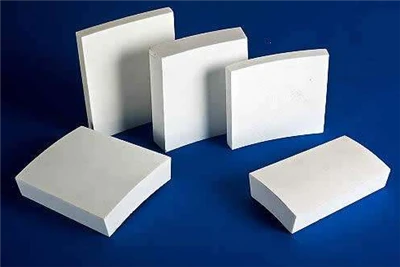
Alumina Ceramic Surface
The working layer uses dense alumina ceramic with selectable grades and thicknesses. The ceramic specification is matched to material size, impact conditions and abrasive loading.
Steel Backing Plate
The steel backing provides rigidity and a continuous mounting base. Thickness is selected according to panel dimensions, support conditions and the installation structure.
Composite Bonding
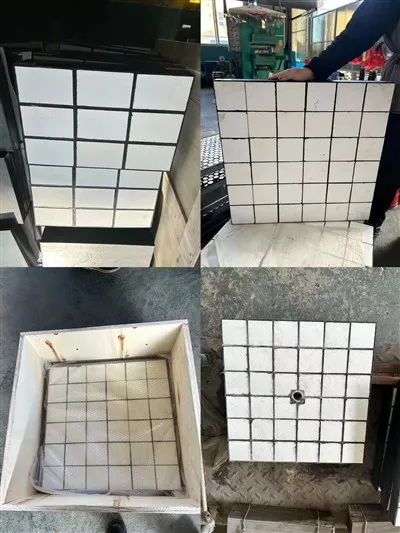
The ceramic is bonded to the steel backing before installation. Bonding quality is controlled across the panel to maintain consistent contact between the ceramic layer and steel plate during service.
Typical Specifications
|
Parameter |
Typical Specification |
|
Alumina content |
92–99% |
|
Ceramic thickness |
10–50 mm |
|
Steel backing thickness |
4–12 mm |
|
Panel size |
Up to 500 × 500 mm |
|
Ceramic density |
3.60–3.90 g/cm³ |
|
Ceramic hardness |
≥ 9 Mohs |
|
Operating temperature |
Up to approximately 250°C* |
|
Installation method |
Welding |
|
Panel configuration |
Flat or fabricated |
Key Product Benefits
Weldable Mounting
The steel backing provides a weldable surface for compatible steel structures. This allows panels to be integrated with fabricated equipment where a rigid mounting arrangement is required.
Impact Resistance
The composite construction is intended for zones receiving direct material impact. Ceramic thickness and panel construction can be selected according to drop conditions and impact concentration.
Abrasion Control
The alumina ceramic working surface provides the primary wear layer against abrasive material. Ceramic grade and thickness are selected according to the expected wear mechanism.
Rigid Panel Structure
The steel backing supports the ceramic layer and provides dimensional stability during installation. It also allows the liner to follow the existing steel structure.
Where It Is Used
Transfer Chutes
Used at receiving and discharge zones where falling material creates concentrated impact and abrasive contact.
Hoppers and Bins
Applied to loading areas, outlet sections and wall surfaces exposed to repeated material impact and flow.
Feeders
Used in material loading areas where impact, sliding abrasion and continuous material movement occur together.
Bunkers and Transfer Points
Applied to localized wear zones where ceramic protection is required on a fabricated steel structure.
Material Selection
Ceramic Grade
Alumina content is selected according to the required wear performance and operating conditions. Ceramic grade should be considered together with thickness, material characteristics and impact intensity.
Ceramic Thickness
Thickness is determined by the combination of particle size, material density, drop conditions and expected wear. The same ceramic grade may require different thicknesses for different impact zones.
Backing Steel
Backing thickness is selected according to panel dimensions, structural support and welding conditions. Compatibility with the existing steel structure should be confirmed before installation.
Bonding System
The bonding system is selected according to operating temperature and mechanical loading. Impact applications require consistent bonding between the ceramic and steel backing.
Application Selection
Material Characteristics
Review particle size, bulk density, hardness and material temperature before selecting the liner configuration. These factors directly affect impact and abrasion conditions.
Impact Profile
Drop height, flow velocity and impact concentration determine the loading on the ceramic surface. Localized impact zones may require a different ceramic thickness from surrounding areas.
Wear Pattern
Identify whether the area is dominated by direct impact, sliding abrasion or a combination of both. The lining layout and ceramic thickness can then be matched to the actual wear pattern.
Equipment Geometry
Panel dimensions, steel surface condition, access for welding and joint locations should be checked before finalizing the lining arrangement.
Fabrication Options
Panel Dimensions: Length and width can be specified to match the available lining area and installation sequence.
Edge Configuration: Panel edges can be prepared according to joint layout, equipment geometry and the required coverage pattern.
Hole and Cutout Requirements: Holes and cutouts can be incorporated for structural members, access points and equipment interfaces where required.
Shaped Components: Fabricated sections can be considered for areas where flat panels do not match the equipment profile.
Quality Control
Ceramic Inspection: Ceramic composition, thickness, dimensions and surface condition are checked against the specified requirements.
Bonding Inspection: The ceramic-to-steel interface is inspected for bonding consistency and visible separation across the finished panel.
Backing Inspection: Steel thickness, panel dimensions, edge condition and specified fabrication details are checked before completion.
Final Inspection: Finished panels are checked against the approved dimensions and configuration before packing and shipment.
What to Confirm Before Ordering
Equipment Information
Provide equipment type, lining location, available steel surface, panel dimensions and drawings where available.
Material Conditions
Confirm material type, particle size, bulk density, temperature and flow direction.
Impact Conditions
Provide drop height, loading pattern and the areas receiving the highest material impact.
Installation Requirements
Confirm existing steel thickness, welding access, panel joint arrangement, required holes and cutouts.
FAQ
Q: Can the liner be welded onto steel equipment?
A: Yes. The steel backing provides a weldable mounting surface for compatible steel structures. Welding conditions should be matched to the backing material and host structure.
Q: How is ceramic thickness selected?
A: Ceramic thickness is selected according to particle size, material density, drop conditions, impact concentration and expected wear.
Q: Is the liner suitable for impact and abrasion?
A: Yes. The alumina ceramic surface addresses abrasive contact, while the steel-backed structure supports installation in impact areas.
Q: Can panel dimensions be customized?
A: Yes. Panel dimensions, ceramic thickness, backing thickness, edge configuration, holes and cutouts can be specified according to equipment requirements.
Q: What information is required for quotation?
A: Equipment drawings or dimensions, material characteristics, temperature, impact conditions, required ceramic thickness and installation arrangement provide the main information required for configuration.
Hot Tags: weldable ceramic impact liner, China weldable ceramic impact liner manufacturers, suppliers, factory, Removable Ceramic Conveyor Linings
Previous
No InformationYou Might Also Like




Send Inquiry