


Composite Ceramic Liner
The Composite Ceramic Liner Manufacturer
We take the new management mode, perfect technology, thoughtful service and excellent quality as the basis of survival. We always adhere to the customer first and serve customers attentively, and insist on impressing customers with our own services.





Why choose us
Experience
With advanced production equipment, rich production experience, perfect quality assurance system, Kingcera has become an advanced special ceramic industrialization production enterprise.
Quality assurance
We have 100% quality guarantee to customers. We will be responsible for any quality problem.
Fast delivery
Arrangement of shipment in time, no breach of contract, tracking the progress of cargo transportation throughout the process.
Customer Service
Our customer service team is committed to providing exceptional support and addressing any concerns promptly. We prioritize clear communication and proactive problem-solving to ensure a seamless experience for every client.
|
Item |
Data |
|
Tensile Strength |
25MPa |
|
Break Extension |
500% |
|
Shore Hardness |
85±5 |
|
Break permanent deformation |
30% |
|
Main composition |
Polyurethane+SBR |
|
Peel strength between PU and ceramic / PU and steel |
19MPa |
|
Bonding Strength between PU and ceramic |
15MPa |
|
Panel Size |
200×200, 250×250, 300x300, 390x390, 400×400, 500×500, 600×600, and half size or customized sizes |
|
Ceramic size |
Ceramic tiles are available from 10x 10 mm to 100 x 150 mm; thickness from 1.5 mm to 50 mm |
|
Alloy Steel Size |
Alloy steel plate with thickness ranging from 3 mm to 10 mm |
|
Polyurethane Thickness |
Depends upon the impact stress expected |
|
Remark |
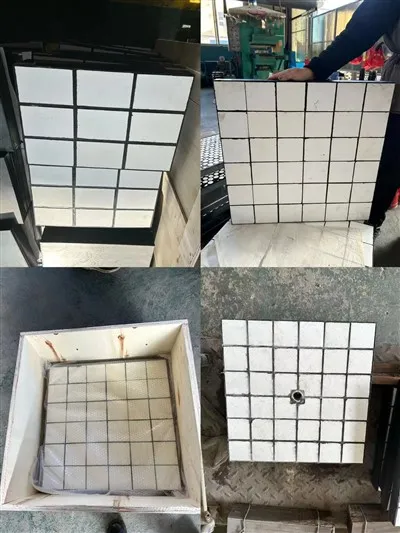
Metal+Rubber+Ceramic / rubber+Ceramic plain surface or spherical surface. The steel bolt also available upon requests |
Advantages of Ceramic Rubber Composite Liners in Industrial Applications
Superior Wear Resistance
Ceramic rubber composite liners combine the high hardness and wear resistance of ceramic materials with the elasticity and toughness of rubber. The ceramic surface layer utilizes high-hardness, ultra-wear-resistant alumina ceramic material, with a hardness exceeding HRA85, offering 271.5 times the wear resistance of manganese steel. This effectively mitigates material abrasion and substantially extends equipment service life. In industries such as steel manufacturing and mining, where heavy wear is prevalent, ceramic rubber composite liners excel as an ideal solution for protecting equipment.
Outstanding Impact Resistance
The rubber substrate provides excellent flexibility and vibration damping, enabling effective absorption and dispersion of impact forces. When equipment is subjected to large material impacts, the rubber layer acts as a buffer, preventing direct impact-induced fractures in the ceramic layer. This superior impact resistance makes ceramic rubber composite liners highly advantageous in high-impact environments like hoppers and chutes.
Excellent Corrosion Resistance
The inherent corrosion resistance of ceramic materials ensures robust protection against chemical erosion. Consequently, ceramic rubber composite liners perform exceptionally well in industries such as petrochemicals and power generation, safeguarding equipment from corrosive damage.
Easy Installation and Maintenance
Ceramic rubber composite liners are designed for straightforward installation and maintenance. The steel plate backing includes pre-drilled bolts for easy attachment to equipment shells. When liners reach their wear limit, they can be quickly replaced, minimizing downtime and reducing maintenance costs.
Broad Application Scope
Thanks to their exceptional performance, ceramic rubber composite liners are widely adopted across multiple industries. They effectively withstand material abrasion and impact, protecting equipment from damage and enhancing operational efficiency. These liners play a critical role in material handling systems within mining, metallurgy, power, and chemical industries.
Mining
Used in wear-resistant parts of equipment such as ball mills, coal mills, bucket elevators, and scraper conveyors, such as chutes, pipes, conveyor belts, hoppers, etc., to improve the operating efficiency and stability of the equipment.
Chemical industry
Used in reactors, pipes, storage tanks and other equipment in the chemical industry to prevent chemical corrosion.
Power generation
Commonly used to prevent wear of coal mills, crushers, boiler parts, coal transportation systems, ash removal systems and pipelines.
Metallurgy and steel
Used in silos, hoppers, mixers, ball making discs and other equipment for feeding and batching
Cement plants
Used in powder selectors, ball mills, unloading chutes, clinker coolers, transfer chutes and other parts to protect them from erosion by abrasive cement particles.
Coal industry
Used in coal washing equipment, coal transportation pipelines, chutes and other easily worn parts.

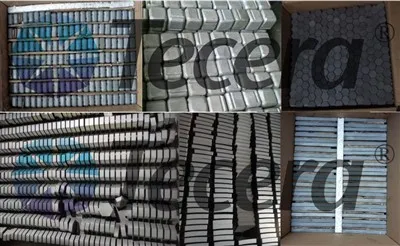
Cartons or wooden boxes. We pack the goods with 6-8 strapping tapes and waterproof films and load the large goods on pallets to ensure they are delivered to you safely and intact.
