


Rubber Composite Wear Liner
Product Structure
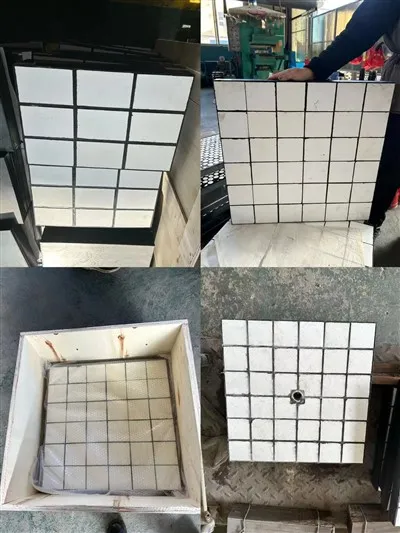
The rubber ceramic composite wear liner is manufactured using an advanced hot vulcanization process, in which high-alumina wear-resistant ceramic tiles are integrally vulcanized with high-performance rubber to form a ceramic–rubber two-in-one composite liner.
The finished liner is then bonded to the inner steel shell of the equipment using high-strength industrial adhesive, creating a strong, durable, and impact-absorbing anti-wear lining system.

This structure combines:
Ceramic → ultra-high hardness and outstanding abrasion resistance
Rubber → excellent impact absorption, elasticity, noise reduction, and fatigue resistance
It effectively solves severe wear problems caused by large particle materials, high-impact loading, and continuous abrasion during material handling processes.
The rubber layer also helps to:
Reduce noise
Prevent material build-up and blockage
Improve corrosion resistance
Extend overall equipment service life
The ceramic layer provides ultra‑high hardness – Mohs 9 – so sliding abrasive particles do not scratch or wear it down. The rubber layer underneath absorbs impact energy when large lumps of material drop onto the liner. Together, they solve the problem that pure ceramic or pure rubber cannot handle alone.
The rubber also reduces noise. A steel chute lined with rubber ceramic composite is noticeably quieter than one lined with steel or rigid ceramic. For plant operators working near transfer points, this matters. The rubber also prevents material from sticking – its slight flexibility shakes off fines that would otherwise build up on a rigid ceramic surface.
Because the rubber is bonded directly to the ceramic, there are no gaps or weak points where slurry could seep in and corrode the steel underneath. The rubber itself resists many chemicals, and the ceramic is inert to almost everything except hydrofluoric acid. Together, they extend the life of the equipment shell far beyond what steel or rubber alone could achieve.
Triple-Composite Structure Option
Ceramic tiles and special rubber can also be vulcanized directly onto a steel backing plate with countersunk bolts, forming a three-in-one composite liner (ceramic + rubber + steel).
This structure allows:
Fast installation
Easy replacement
Strong mechanical fixation
High structural stability in heavy-duty working conditions
Key Advantages
Ultra-high wear resistance
Excellent impact resistance
Noise and vibration reduction
Anti-blocking performance
Corrosion resistance
Long service life
Easy installation & maintenance
Modular design available
Application Areas
Suitable for normal-temperature material handling systems where abrasion and impact are present, including:
Hoppers
Bins & silos
Chutes
Transfer points
Coal drop chutes
Coal bunkers
Coal pipelines
Feed chutes
Mixers
Conveyor transfer systems
Inlet/outlet pipes of coal mills
Bulk material handling equipment
Typical Industries
Mining
Power plants
Cement plants
Steel plants
Coal handling systems
Ports & terminals
Bulk material conveying systems
Mineral processing
Aggregates industry
Installation Methods
High-strength industrial adhesive bonding
Bolt-fixed steel-backed composite structure
Custom modular assembly
Adhesive bonding. The most common method. Apply high‑strength industrial epoxy to the steel shell, press the composite liner into place, and let it cure. Suitable for most chutes, hoppers, and bins.
Bolt‑on steel‑backed panels. The triple‑composite option. The liner comes with a steel backing plate and countersunk bolts. Drill holes in the equipment shell, bolt the panel on. No curing time, easy replacement, and the mechanical fixation holds even if the adhesive fails.
Custom modular assembly. For large or complex equipment, we can supply panels that interlock or overlap, with pre‑drilled holes and matching bolt patterns. This speeds up field installation and ensures consistent fit.
Customization
Tile size & thickness customizable
Rubber hardness and thickness adjustable
Steel plate thickness optional
Bolt pattern customizable
Shape and curvature customized to equipment structure
Hot Tags: rubber composite wear liner, China rubber composite wear liner manufacturers, suppliers, factory, Ceramic Lining Panels for Belt Conveyors
Previous
No InformationYou Might Also Like



Send Inquiry