


Ceramic Transfer Point Liner
Ceramic Transfer Point Liner Manufacturer & Global Supplier
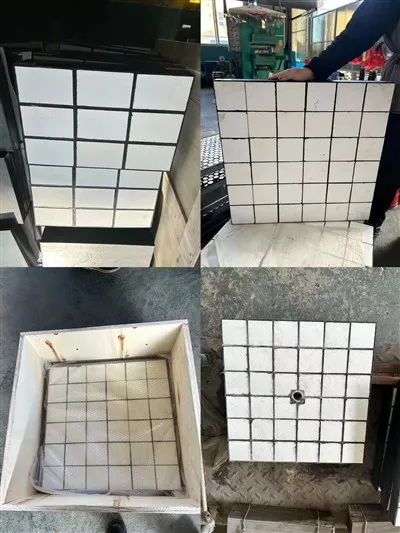
We manufacture ceramic transfer point liners for bulk material handling areas exposed to impact and abrasive flow. With more than 25 years of ceramic manufacturing experience, over 30,000 m² of production space, three automatic production lines and annual wear-resistant ceramic capacity above 30,000 metric tons, we supply alumina ceramic and composite liner configurations for transfer chutes, loading areas, discharge zones, hoppers and bins. Ceramic grade, thickness, dimensions and liner structure can be specified according to the application.


Why Choose Us
Application-Based Engineering
Transfer point liner requirements can be reviewed from material flow, particle size, impact location, chute geometry and installation space. This helps define the liner configuration from actual operating conditions.
Production Flexibility
Different tile sizes, shapes, thicknesses and composite structures can be arranged for specific liner layouts. Production can follow confirmed drawings and dimensional requirements rather than a single fixed configuration.
Specification Control
Ceramic grade and key material properties are defined by measurable technical data. Product specifications can be confirmed before production for engineering review, purchasing records and project documentation.
Order Coordination
Technical requirements, quantities, drawings, packaging and shipment details can be confirmed during the order process. This provides a clear reference from initial quotation to final delivery.
Transfer Point Liner Applications

Transfer Chutes
Ceramic liners protect chute surfaces where bulk material changes direction or moves between conveying sections.
Loading Areas
Composite ceramic configurations can be used where material enters from an elevated position and creates repeated impact on the receiving surface.
Discharge Areas
Ceramic lining protects surfaces exposed to continuous material flow after discharge from conveying or processing sections.
Hoppers and Bins
Liners protect internal surfaces during loading, storage and discharge of abrasive bulk materials.
Bulk Material Handling
Typical applications include mining, mineral processing, cement, aggregates, steel, power generation and other bulk material handling operations.
Ceramic Liner Structure Options
Alumina Ceramic
Alumina ceramic provides a dense working surface for applications where sliding abrasion is the main wear mechanism. Ceramic grade and thickness can be selected according to the operating conditions.
Ceramic-Rubber Composite
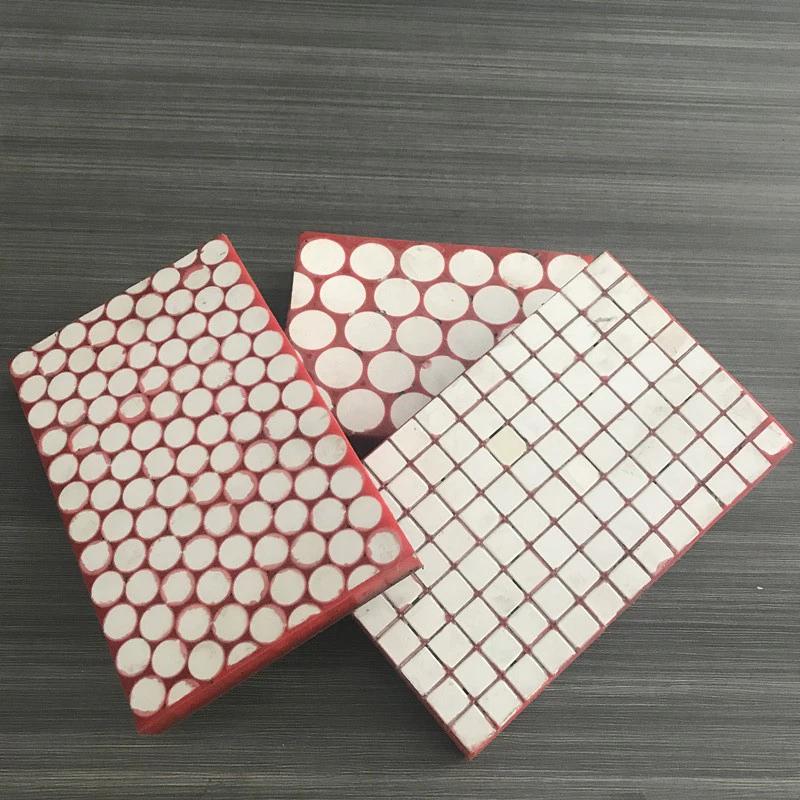
Ceramic elements can be integrated with a rubber backing where impact and abrasion occur together. The ceramic provides the wear surface while the rubber layer supports impact management.
Ceramic-Steel Composite
Ceramic components can be combined with a steel backing where a rigid support structure and defined mechanical fixing arrangement are required.
Application-Matched Structure
Ceramic thickness, tile geometry, backing material and fixing method should be selected together according to material flow, impact conditions, equipment geometry and installation space.
Ceramic Grade & Material Selection
Alumina Content
The main alumina ceramic grades include 92%, 95%, 97% and 99% Al₂O₃. Grade selection should consider the material handled, abrasion level and required mechanical properties.
Density and Hardness
Bulk density and hardness provide useful references when comparing ceramic grades. Alumina ceramic has a Mohs hardness of 9.
Fracture Toughness
Fracture toughness is relevant where ceramic components experience repeated mechanical loading. Impact conditions should be reviewed together with abrasion requirements when selecting the grade.
Technical Specifications
|
Property |
TW92 |
TW95 |
TW97 |
TW99 |
|
Al₂O₃ Content |
≥92% |
≥95% |
≥97% |
≥99% |
|
Vickers Hardness HV50 |
≥970 |
≥975 |
≥1300 |
≥1450 |
|
Water Absorption |
≤0.01% |
≤0.01% |
≤0.01% |
≤0.01% |
|
Fracture Toughness |
4.60 MPa·m¹/² |
4.65 MPa·m¹/² |
5.20 MPa·m¹/² |
5.50 MPa·m¹/² |
|
Bulk Density |
≥3.63 g/cm³ |
≥3.65 g/cm³ |
≥3.80 g/cm³ |
≥3.85 g/cm³ |
Size, Thickness & Shape Customization
Custom Dimensions
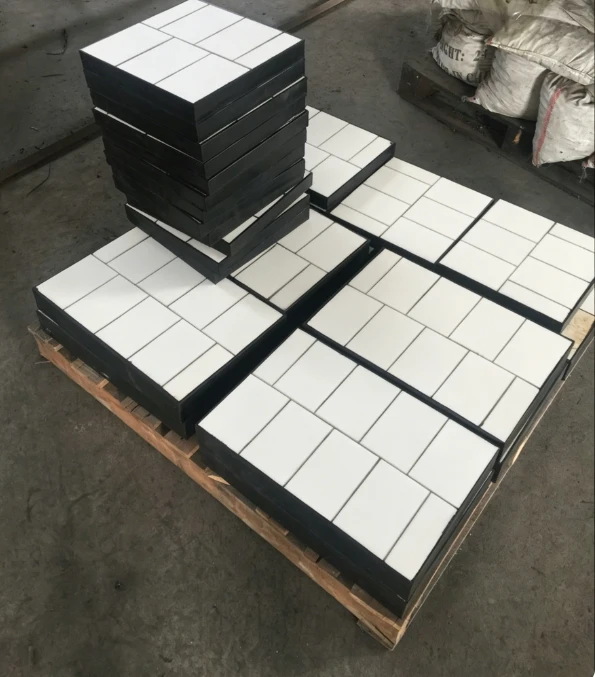
Liner length, width and thickness can be specified according to the protected surface. Individual tiles, blocks and assembled panels can be prepared for different liner layouts.
Thickness Range
Ceramic thickness can be selected according to tile size, material particle size, impact conditions and available installation space. The available product range covers different thickness configurations for transfer point applications.

Shaped Components
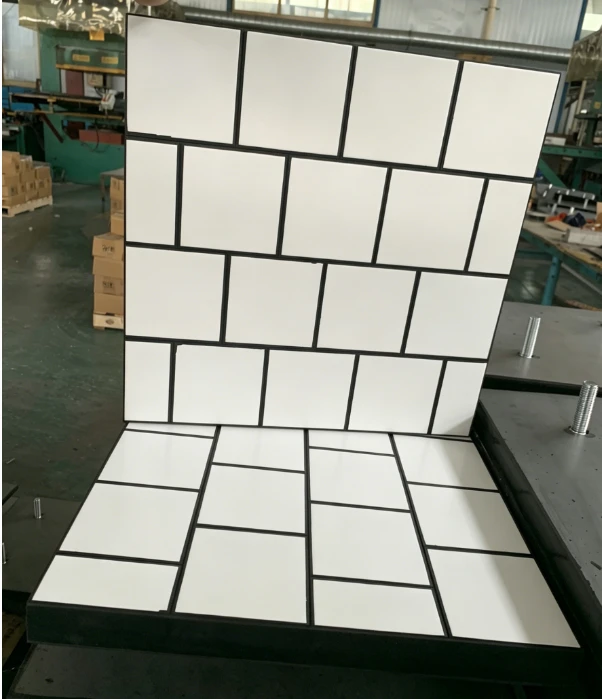
Square, rectangular, curved and application-specific ceramic components can be produced according to the protected surface and liner layout.
Drawing-Based Production
Equipment drawings and liner layouts can be reviewed before production. Dimensions, hole positions, edge details, joint arrangements and fixing requirements can be incorporated into the confirmed design.
Installation Options
Adhesive Bonding
Bonding installation can be used where the substrate condition, operating temperature and service environment are suitable for adhesive application.
Mechanical Fixing
Mechanical fixing can be used where direct attachment to the supporting structure is required. Fixing positions should be confirmed during dimensional review.
Steel-Backed Installation
Steel-backed configurations provide a rigid support structure for ceramic components and allow defined mechanical fixing arrangements.
Installation Planning
Installation method should be confirmed together with liner dimensions, backing structure, access space and planned replacement requirements.
Material: Provide the material type, particle size, moisture condition and bulk characteristics. These details establish the working wear environment.
Impact: Provide drop height, particle size, material flow direction and main impact location. These factors influence ceramic thickness and liner structure.
Abrasion: Identify whether the working area is mainly exposed to sliding abrasion, direct impact or a combination of both. This helps determine ceramic grade and backing configuration.
Equipment: Provide chute, hopper or transfer point dimensions, surface geometry and available installation space for liner planning.
Installation: Confirm the preferred installation method, fixing points and access requirements before the liner layout is finalized.
Ceramic Processing: Alumina ceramic composition is controlled according to the selected grade. Forming and high-temperature sintering establish the required density and material properties.
Production Capacity: More than 25 years of ceramic manufacturing experience, three automatic production lines and annual wear-resistant ceramic capacity above 30,000 metric tons support regular industrial production.
Material Inspection: Inspection can cover alumina content, density, hardness, water absorption, fracture toughness, dimensions and surface condition according to the selected product specification.
Dimensional Control: Finished ceramic components are checked against confirmed dimensions so that individual tiles and panels follow the planned liner layout.
Certifications & Quality Documentation
ISO 9001
ISO 9001 certification supports the quality management system used for production and related processes.
ISO 14001
ISO 14001 certification covers the environmental management system.
ISO 45001
ISO 45001 certification covers the occupational health and safety management system.
Technical Documentation
Technical specifications and inspection information can be confirmed according to the selected ceramic grade and liner configuration.
Packaging & After-Sales Support
Export Packaging
Ceramic products can be packed in cartons or PP bags and secured on fumigated wooden pallets according to product size and shipment requirements.
Shipment Coordination
Product quantities, packing arrangements and shipment details can be confirmed before dispatch to support international purchasing and logistics planning.
Customer Support
Product information, order communication and project-related requirements can be coordinated before and after shipment.
Frequently Asked Questions

Request a Ceramic Transfer Point Liner Quote
Send the material conditions, transfer point dimensions, liner layout and installation requirements. Drawings or existing liner dimensions can be included for review. Ceramic grade, structure, dimensions and packing requirements can then be confirmed for quotation.