


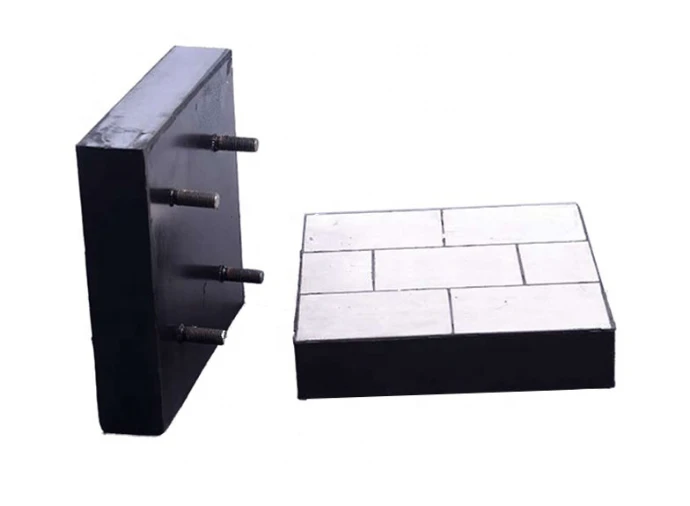
Rubber Steel Ceramic Panel
Product Introduction
A rubber steel ceramic panel (three-in-one ceramic composite plate) is a multi‑layer wear protection system that combines the abrasion resistance of high‑density alumina ceramic, the impact absorption of vulcanised rubber, and the structural strength of a steel backing. It is used in mining chutes, power plant coal handling systems, cement transfer points, steel mill sinter lines, and ship loading terminals. The rubber absorbs impact energy that would shatter pure ceramic liners; the steel provides rigidity and simple bolt‑on installation. This solves the problem of liners cracking under heavy lumps or detaching under vibration. For a wholesale buyer, it means one product that handles both high‑impact and high‑abrasion zones.
Core Characteristics
Four features define a rubber steel ceramic panel:
Ceramic wear layer. High‑purity alumina (92–95% Al₂O₃) tiles or blocks provide a Mohs hardness of 9, resisting sliding abrasion from ore, coal, cement and ash.
Rubber impact layer. Vulcanised natural or synthetic rubber (Shore hardness 45–65) absorbs impact energy. It compresses under heavy lumps, preventing the ceramic from cracking, and reduces noise.
Steel backing plate. A carbon steel plate (typically 3–10 mm thick) provides mechanical strength and simplifies installation. The panel can be bolted directly to equipment using countersunk bolts, with no curing time.
Hot vulcanised bond. The ceramic tiles are chemically bonded to the rubber layer under heat and pressure, not merely glued. This creates a bond that will not delaminate under vibration or thermal cycling.
Keywords: rubber steel ceramic panel, three-in-one composite wear plate, alumina rubber steel liner, impact resistant ceramic panel
Material, Structure and Manufacturing
Material composition. The ceramic tile is high‑density alumina (92%, 95% or ZTA grade). The rubber is a formulated natural rubber or SBR compound, often containing flame retardants for power plant applications. The steel backing is mild carbon steel (e.g. Q235B or A36), typically 5–6 mm thick. Some designs include pre‑installed countersunk bolts on the steel plate for instant bolt‑on installation.
Layered structure. The panel is a true sandwich: a steel baseplate at the bottom, a vulcanised rubber layer in the middle, and ceramic tiles embedded into the rubber on top. The rubber completely surrounds the sides of each tile, sealing the gaps. The tile surface is flush with the rubber or slightly raised.
Manufacturing process. The process uses hot vulcanisation. The rubber sheet is partially cured, the ceramic tiles are placed into the rubber in a mould, and the steel backing is positioned. The assembly is then heated under pressure in a vulcanising press. The rubber flows around the tiles and chemically bonds to both the ceramic and the steel. After vulcanisation, the panel is trimmed and any flash rubber is removed. Some manufacturers use a two‑stage process: first bonding the ceramic to the rubber, then bonding the rubber to the steel using a specialised adhesive.
Quality control. Each batch is tested for rubber‑ceramic peel strength (≥3.5 MPa), rubber‑steel adhesion (≥3.5 MPa), ceramic hardness (HRA ≥85), bulk density (≥3.6 g/cm³), and water absorption (≤0.01%). Panels with voids, poor adhesion, or misaligned tiles are rejected. The entire assembly is then inspected for dimensional accuracy before shipment.
What sets Tecera apart. Many suppliers cut corners by using cold‑bonded adhesives instead of hot vulcanisation. The difference is critical. Cold‑bonded adhesives can soften under heat, age under UV exposure, or crack under vibration. Hot vulcanised rubber forms a chemical bond that is inseparable. With over 25 years of production experience, Tecera uses computer‑controlled vulcanising presses and in‑house ceramic tile manufacturing to ensure batch‑to‑batch consistency. The result is a panel that will not delaminate, even after years of heavy impact.
Keywords: hot vulcanised ceramic rubber steel plate, alumina rubber composite liner, wear resistant steel backed tile, impact absorbing ceramic panel
Technical Specifications
The following tables show typical specifications for Tecera's rubber steel ceramic panels. Batch certificates are available on request.
Table 1 – Ceramic tile properties (typical values)
| Property | 92% Alumina | 95% Alumina | ZTA Grade |
|---|---|---|---|
| Al₂O₃ content (%) | ≥92 | ≥95 | 75–80 |
| ZrO₂ content (%) | – | – | 20–25 |
| Bulk density (g/cm³) | ≥3.60 | ≥3.68 | ≥4.00 |
| Water absorption (%) | ≤0.01 | ≤0.01 | ≤0.01 |
| Mohs hardness | 9 | 9 | 9 |
| Rockwell hardness (HRA) | ≥85 | ≥88 | ≥90 |
| Fracture toughness (MPa·m¹/²) | 4.6 | 4.7 | ≥5.5 |
Table 2 – Rubber layer properties
| Property | Standard rubber | High‑temperature grade |
|---|---|---|
| Material | Natural rubber / SBR | Neoprene / Nitrile |
| Tensile strength (MPa) | ≥14 | ≥12 |
| Elongation at break (%) | ≥250 | ≥200 |
| Shore hardness (HA) | 48–65 | 55–70 |
| Temperature range (°C) | –40 to +120 | –20 to +200 |
| Rubber thickness (mm) | 4–10 | 4–10 |
| Adhesion to ceramic (MPa) | ≥3.5 | ≥3.5 |
| Adhesion to steel (MPa) | ≥3.5 | ≥3.5 |
Table 3 – Steel backing properties
| Property | Standard specification |
|---|---|
| Material | Carbon steel (Q235B, A36, or equivalent) |
| Thickness (mm) | 3–10 |
| Bolt type (if pre‑installed) | Countersunk, grade 8.8 |
| Bolt projection (mm) | 10–20 |
| Corrosion protection | Painted or galvanised on request |
Table 4 – Panel dimensions and tolerances
| Parameter | Standard values |
|---|---|
| Panel size (mm) | 200×200, 300×300, 500×500, 450×300, 530×450 |
| Total thickness (mm) | 12–65 |
| Ceramic tile size (mm) | Square 20×20 to 150×150; hexagon; trapezoid |
| Tile shape | Plain, hexagonal, trapezoid, spherical bulge |
| Mounting method | Bolt‑on (countersunk), adhesive, or weldable studs |
| Tolerance (mm) | ±1.0 on length and width |
Custom sizes and tile patterns are available upon request. For curved chutes, hexagonal tiles (hexmats) are recommended for their flexibility and minimal gap area.
Keywords: rubber steel ceramic panel data sheet, alumina rubber steel liner dimensions, composite wear plate for chute, 3 in 1 ceramic plate specification
Product Advantages
1. Absorbs impact without cracking
Because the rubber layer is vulcanised directly to the ceramic tiles and steel backing, the composite structure deforms elastically under impact. When a heavy lump of ore drops onto the panel, the rubber compresses, spreading the impact force over a larger area and absorbing more than 80% of the energy. The ceramic itself never sees the full shock load. In a ship loader chute handling 300 mm iron ore lumps, pure alumina tiles cracked within weeks. The same installation using rubber steel ceramic panels has run for over 18 months with no visible cracking. For your customer, that means no emergency shutdowns to replace broken tiles and no risk of a shattered piece of ceramic jamming downstream equipment.
2. Vibration resistance prevents loosening
Because the rubber layer dampens mechanical vibration, the bolts and mounting points are subjected to far less cyclic stress. In a vibrating feeder or a rotating drum, ordinary steel or rigid ceramic liners can loosen over time as the bolts work free. The rubber acts as a vibration isolator. For a power plant where a coal feeder runs 24 hours a day, this reduces the need for frequent bolt retightening and eliminates the risk of a loose liner jamming the mechanism. Fewer service calls, less downtime.
3. No liquid penetration, no freeze‑thaw damage
Because the ceramic tiles have water absorption below 0.01% and the rubber layer completely seals the gaps, no process liquid or moisture can penetrate to the steel behind the panel. In a coal preparation plant where the slurry is acidic, this prevents corrosion of the equipment shell. In a power plant located in a freezing climate, it prevents freeze‑thaw cracking. One customer in Inner Mongolia has used Tecera rubber steel ceramic panels in an outdoor chute for six winters with no freeze‑related failures. For you, that means a product you can sell anywhere, without climate‑specific complaints.
4. Noise reduction improves working conditions
Because the rubber layer dampens vibration and impact noise, rubber steel ceramic panels are significantly quieter than steel or pure ceramic liners. In an enclosed transfer tower where noise levels previously exceeded 110 dB, switching to rubber‑backed panels reduced noise to below 95 dB. For a plant operator, that means a safer, more comfortable working environment and easier compliance with workplace noise regulations. For a wholesale buyer, it is an additional selling point for environmental, health and safety departments.
5. Simple bolt‑on installation cuts downtime
Because the steel backing plate is pre‑drilled with countersunk bolt holes, the panels can be installed in the field using only standard hand tools. No welders, no curing time, no special equipment. A crew can replace a set of worn liners in a fraction of the time required for welded steel liners or epoxy‑bonded tiles. A coal mine in West Virginia reduced chute relining time from 24 hours to 6 hours after switching to bolt‑on rubber steel ceramic panels. For your customer, that is less lost production. For you, it is a product that maintenance crews actually enjoy working with.
Keywords: impact resistant ceramic rubber panel, vibration dampening wear plate, bolt on ceramic steel rubber liner, noise reducing chute lining
Application Scenarios – Real Industry Examples
Mining – truck dump hopper (copper ore)
A copper mine in Chile processes 10,000 tons of ore per day. The primary truck dump hopper receives rocks up to 500 mm. Steel liners lasted six months; pure ceramic tiles cracked from impact. Tecera supplied rubber steel ceramic panels with 25 mm thick ZTA tiles. After 18 months, the panels showed only minor wear and no cracking. The plant has eliminated unplanned chute repairs, saving an estimated $300,000 annually in downtime and labour.
Coal preparation – heavy media cyclone feed chute
A coal prep plant in West Virginia handles 500 tons per hour of magnetite slurry and coal. Previous steel liners failed every 45 days, costing the plant $2.1 million per year in repair costs and lost production [17†L18-L20]. Tecera provided 500×500 mm ZTA rubber steel ceramic panels. After 18 months of operation, measured wear depth was only 1.2 mm, compared to over 15 mm of steel wear over the same period. The panels are projected to last over five years, with a payback period of less than three months [17†L19-L21].
Power generation – coal handling transfer chute
A coal‑fired power plant in Ohio experienced severe impact damage in a transfer chute where coal dropped six metres onto the lining. Traditional steel liners lasted eight months; epoxy‑bonded ceramic tiles cracked after three months. The plant installed Tecera rubber steel ceramic panels with 92% alumina tiles and 8 mm rubber backing. After two years of operation, the panels remained intact with no cracked tiles. The rubber layer had absorbed the impact energy, protecting the ceramic. The plant has since specified rubber steel ceramic panels for all high‑impact transfer points.
Steel mill – sinter plant discharge chute
A steel mill in China handles sinter at 400 °C. The material is both abrasive and hot. Pure rubber liners melted. Steel liners eroded rapidly. Alumina tiles cracked from thermal shock. Tecera supplied high‑temperature grade rubber steel ceramic panels using neoprene rubber (rated to 200 °C) and 95% alumina tiles. The panels were bolted directly to the existing chute shell. After 14 months of operation, the lining shows no delamination, no cracked tiles, and wear well below expected levels. The mill has extended chute replacement intervals from 6 months to over 24 months.
Cement plant – clinker conveyor transfer point
A cement plant in Brazil processes 8,000 tons of clinker per day. The clinker emerges from the cooler at 150 °C and drops onto a steel conveyor feed chute. Steel liners required replacement every 6 months. Tecera supplied rubber steel ceramic panels with 95% alumina tiles and a medium‑temperature rubber formulation. After 28 months of operation, the panels remain in excellent condition, with no visible cracking or delamination. The plant has removed the chute from its annual maintenance schedule entirely.
Port terminal – ship loader chute
A bulk port in Australia loads 4,000 tons per hour of iron ore onto vessels. The ship loader chute experiences extreme impact from falling ore. Conventional wear liners failed every 4–5 months. Tecera designed a custom‑shaped rubber steel ceramic panel with hexagonal ZTA tiles to follow the curved chute profile. After three years of continuous operation, the lining remains intact. The port has reduced chute maintenance from 3 days per quarter to one day per year.
Aggregate processing – primary crusher feed chute
A granite quarry in Brazil processes 300 tons per hour of hard rock. The primary crusher feed chute suffers extreme impact. Tecera supplied 40 mm thick rubber steel ceramic panels with 95% alumina tiles and a 10 mm rubber layer. The rubber absorbs the impact; the ceramic resists the sliding abrasion. After 18 months of continuous operation, the panels show minimal wear. The quarry has eliminated emergency chute repairs, saving an estimated $50,000 annually in lost production.
Keywords: rubber steel ceramic panel mining, wear resistant chute liner for power plant, three-in-one ceramic plate for cement, rubber backed ceramic tile for steel mill
Ordering and Support
Tecera supplies rubber steel ceramic panels in 92%, 95%, and ZTA grades, with rubber thickness from 4 mm to 10 mm and steel backing from 3 mm to 10 mm. Standard panel sizes: 200×200 mm, 300×300 mm, 500×500 mm, and custom sizes. Mounting options include pre‑installed countersunk bolts (most common), adhesive backing, or weldable studs.
To request a quote, please provide: panel size and thickness, ceramic grade (92%, 95%, or ZTA), operating conditions (material type, lump size, drop height, temperature, pH), and estimated annual volume. For custom panel shapes, send a drawing in DWG, PDF, or STEP format.
Bulk pricing is available for wholesale buyers. Free samples for destructive testing are available. Lead time for standard sizes is 2–3 weeks; custom panels require 4–6 weeks. Global shipping with export‑grade packaging is provided. Response time for quote requests is typically two business days.
Keywords: buy rubber steel ceramic panel, composite wear plate supplier, three-in-one ceramic liner for mining, impact resistant chute lining wholesale
Hot Tags: rubber steel ceramic panel, China rubber steel ceramic panel manufacturers, suppliers, factory, Ceramic Lining Panels for Belt Conveyors
Previous
Ceramic Vulcanized PlateNext
No InformationYou Might Also Like


Send Inquiry