


Ceramic Impact Cube Liner
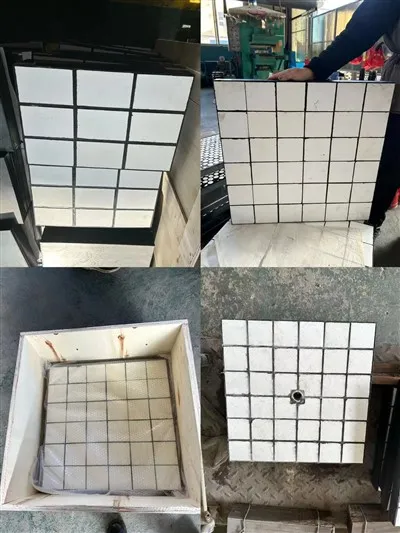
Ceramic Impact Cube Liner is a composite wear lining for bulk material handling areas exposed to impact and abrasive flow. Alumina ceramic cubes provide the working surface, while rubber or polyurethane backing helps absorb impact energy. Steel-backed configurations support mechanical installation on transfer chutes, hoppers, bunkers, and discharge zones.
Product Structure
Ceramic Working Surface
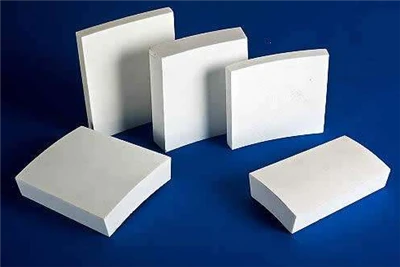
Alumina ceramic cubes form the primary wear surface. Available alumina grades include 92%, 95%, and 99%, allowing the lining to be matched with different abrasion conditions.
Elastic Backing
Rubber or polyurethane provides a resilient layer between the ceramic and equipment shell. Its flexibility helps absorb impact energy and distribute localized loads across the composite structure.
Steel Backing
Steel backing plates provide structural support for mechanically mounted panels. Pre-welded studs, bolt holes, and countersunk fasteners can be incorporated according to the installation design.
Where It Uses
Transfer Chutes
Installed at material transfer points where falling bulk solids contact chute walls and change direction, creating concentrated impact and sliding wear.
Hoppers and Bunkers
Used on internal surfaces handling minerals, coal, aggregates, and other bulk solids where material loading produces repeated impact and abrasion.
Discharge Areas
Applied to discharge sections exposed to material acceleration, impact loading, and continuous sliding contact.
Material Handling Systems
Suitable for wear zones in mining, mineral processing, cement production, steel production, power generation, and port material handling facilities.
When to Select Cube Construction
Impact Zones
Cube construction is suited to localized areas receiving repeated material impact. The elastic backing layer helps manage shock loads before they reach the equipment shell.
Abrasive Flow
The alumina working face provides a hard contact surface for sliding particles, making the configuration suitable for combined impact and abrasion conditions.
Irregular Profiles
Individual ceramic cubes can follow curved, stepped, conical, and other complex profiles more easily than large rigid ceramic plates.
Key Product Benefits
Impact Absorption
The resilient backing layer helps dissipate impact energy and reduces concentrated stress transferred to the equipment structure.
Abrasion Resistance
Dense alumina ceramic provides a hard wear surface for applications involving continuous contact with abrasive bulk solids.
Layout Flexibility
Cube dimensions, ceramic thickness, panel size, and backing construction can be configured around equipment geometry and installation requirements.
Maintenance Access
Modular panels allow individual wear sections to be replaced during planned maintenance without removing the complete lining system.
Technical Parameters
|
Parameter |
Specification |
|
Ceramic material |
Alumina ceramic |
|
Alumina content |
92%, 95%, 99% |
|
Ceramic density |
3.6–3.7 g/cm³ |
|
Ceramic hardness |
HRA 85–90 |
|
Compressive strength |
850–950 MPa |
|
Cube sizes |
23×23, 35.7×35.7, 38×38, 40×40, 50×50 mm |
|
Ceramic thickness |
10–50 mm |
|
Panel dimensions |
200×200 to 600×600 mm |
|
Backing options |
Rubber, polyurethane, steel-backed |
|
Bonding strength |
Up to 15 MPa |
Configuration Selection
Cube Size
Select smaller cubes for tighter curves and more complex profiles. Larger cubes are suitable for broad surfaces with relatively simple geometry.
Liner Thickness
Determine ceramic thickness from particle size, material weight, drop height, impact frequency, and available installation clearance.
Backing Material
Rubber and polyurethane are suitable where impact damping is required. Steel backing supports mechanically fixed panel configurations.
Installation Requirements
Surface Preparation
Clean and degrease the mounting surface before installation. Where adhesive bonding is specified, surface preparation should follow the selected bonding system requirements.
Panel Arrangement
Position panel joints outside concentrated impact paths where the equipment layout allows. Maintain consistent joint spacing to support accurate panel alignment.
Fixing Method
Depending on the panel structure, installation can use structural adhesive, threaded studs, countersunk bolts, or combined mechanical and bonded fixing methods.
Quality Control
Ceramic Inspection
Check alumina content, dimensions, density, hardness, surface condition, and dimensional tolerances against the applicable product specification.
Composite Inspection
Verify backing thickness, panel dimensions, ceramic positioning, and bond strength between the ceramic layer and backing material.
Final Inspection
Inspect finished panels for surface flatness, dimensional accuracy, mounting alignment, edge condition, and packaging integrity before dispatch.
Information Required for Selection
Material Conditions
Provide material type, particle size, bulk density, drop height, impact angle, and operating flow rate to support liner configuration.
Liner Dimensions
Provide required panel length, width, total thickness, ceramic thickness, and equipment drawings where available.
Installation Details
Specify mounting surface material, preferred fixing method, clearance limitations, existing bolt patterns, and maintenance access conditions.
FAQ
Q: What alumina grades are available?
A: Standard ceramic options include 92%, 95%, and 99% alumina. The appropriate grade can be selected according to abrasion conditions and required ceramic properties.
Q: What cube sizes are available?
A: Common cube sizes include 23×23 mm, 35.7×35.7 mm, 38×38 mm, 40×40 mm, and 50×50 mm. Other dimensions can be configured according to panel geometry and application requirements.
Q: Can panels match specific equipment dimensions?
A: Yes. Panel dimensions, cube arrangement, ceramic thickness, backing structure, and fixing configuration can be adjusted to suit equipment geometry and installation conditions.
Q: Which backing options are available?
A: Rubber, polyurethane, and steel-backed constructions are available. Selection depends on impact conditions, mounting method, equipment structure, and required panel configuration.
Q: What information is needed for an inquiry?
A: Provide the material type, particle size, bulk density, drop height, impact conditions, required liner dimensions, quantity, mounting method, and equipment drawings when available.
Hot Tags: ceramic impact cube liner, China ceramic impact cube liner manufacturers, suppliers, factory
Previous
Ceramic Impact Tile LinerNext
No InformationYou Might Also Like


Send Inquiry