


Heavy Medium Cyclone Ceramic Liner
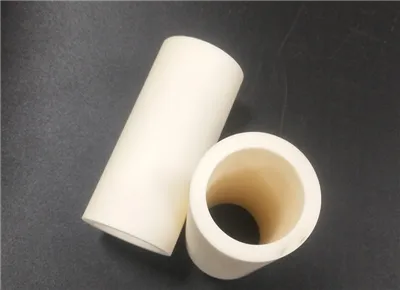
Heavy Medium Cyclone Ceramic Liners protect the internal surfaces of heavy medium cyclones exposed to dense medium, magnetite slurry, coal particles and mineral solids. The lining is matched to the cyclone profile, wear zone and required internal clearance, covering the feed inlet, cylindrical section, cone, overflow passage and underflow area.
Product Application
Coal Preparation: Used in dense medium separation circuits where coal and mineral particles move through the cyclone with abrasive medium.
Mineral Processing: Suitable for abrasive slurry conditions where continuous particle flow creates concentrated wear on cyclone surfaces.
Dense Medium Separation: The ceramic lining protects the cyclone wall while maintaining the specified internal passage for the separation process.
Wear Areas
Feed Inlet: The feed inlet receives direct particle impact as the slurry enters the cyclone. Ceramic grade and thickness should be selected according to feed velocity, particle size and solids concentration.
Cylindrical Section: The cylindrical wall is exposed to continuous sliding abrasion as the slurry follows the cyclone flow path. Dense alumina ceramic provides a hard wear surface for this section.
Cone and Underflow: The narrowing cone concentrates solids toward the discharge. Liner geometry and thickness need to follow the cone profile and underflow opening.
Overflow Passage: The overflow area requires controlled liner dimensions to maintain the specified internal flow passage and avoid unnecessary reduction of the opening.
Material Selection
92% Alumina: A practical ceramic grade for abrasive cyclone sections. Typical bulk density is ≥3.63 g/cm³, with Mohs hardness of 9 and water absorption of ≤0.01%.
95% Alumina: Provides higher alumina content and bulk density for demanding abrasive sections. Typical bulk density is ≥3.68 g/cm³, with Mohs hardness of 9 and water absorption of ≤0.01%.
Wear Zone Matching: Material selection should follow the actual wear mechanism. Feed impact, cylindrical sliding abrasion and lower-cone scouring can require different thickness or ceramic configurations.
Technical Specifications
|
Property |
92% Alumina |
95% Alumina |
|
Al₂O₃ Content |
≥92% |
≥95% |
|
Bulk Density |
≥3.63 g/cm³ |
≥3.68 g/cm³ |
|
Mohs Hardness |
9 |
9 |
|
Water Absorption |
≤0.01% |
≤0.01% |
|
Flexural Strength |
≥240 MPa |
≥250 MPa |
|
Typical Thickness |
6–25 mm |
6–25 mm |
Liner Geometry
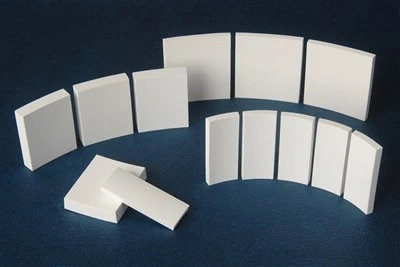
Curved Sections: Arc-shaped ceramic sections follow cylindrical and conical surfaces to maintain close contact with the cyclone shell.
Shaped Sections: Custom-shaped pieces can be prepared for feed areas, transitions, cone sections and discharge zones where standard flat tiles do not match the required profile.
Thickness: Common thicknesses include 6, 10, 12, 15, 20 and 25 mm. Final thickness depends on wear intensity, cyclone geometry and available internal clearance.
Installation Options
Adhesive Bonding: Ceramic sections can be bonded to prepared steel surfaces when the operating temperature and mechanical conditions are suitable for the selected bonding system.
Mechanical Retention: Mechanically retained configurations can be specified for sections where the cyclone structure and installation method require additional retention.
Pre-Fitted Sections: Liner sections can be prepared from drawings, templates or measured dimensions to reduce fitting work during replacement.
Selection Factors
Cyclone Dimensions: Key dimensions include cyclone diameter, cone dimensions, feed inlet size, overflow diameter and underflow diameter.
Operating Conditions: Feed pressure, slurry density, particle size, medium composition and operating temperature should be reviewed before final material and thickness selection.
Wear Distribution: The wear pattern should be assessed by zone. Inlet impact, cylindrical abrasion and lower-cone erosion can produce different wear rates within the same cyclone.
Manufacturing Control
Ceramic Forming: Ceramic sections are formed to the required shape and dimensions before high-temperature sintering.
Surface Finishing: Critical surfaces can be ground after sintering where tighter dimensional control is required for fitting, joints or internal clearance.
Inspection: Typical checks include ceramic composition, bulk density, hardness, water absorption, dimensions and visible surface condition.
Specification for Quotation
The following information helps define the required liner configuration:
- Cyclone drawing or existing liner drawing
- Cyclone diameter and cone dimensions
- Feed inlet dimensions
- Overflow and underflow dimensions
- Existing liner thickness
- Operating medium and solids characteristics
- Current liner material and wear condition
- Required quantity or total lining area
Why Use a Ceramic Cyclone Liner?
Hard Wear Surface: Alumina ceramic with Mohs hardness of 9 provides a hard internal surface for abrasive dense-medium slurry.
Controlled Flow Passage: Accurate liner geometry helps maintain the specified internal passage as the steel shell is protected from direct abrasive contact.
Low Water Absorption: Water absorption of ≤0.01% indicates a dense ceramic structure suited to wet slurry service.
Zone-Based Configuration: Ceramic grade, thickness and section shape can be specified according to the actual wear location instead of using one configuration throughout the cyclone.
FAQ
Q: What ceramic material is used for heavy medium cyclone liners?
A: 92% and 95% alumina are available for abrasive cyclone sections. The appropriate grade depends on the wear zone and operating conditions.
Q: What thicknesses are available?
A: Common thicknesses include 6, 10, 12, 15, 20 and 25 mm. Final thickness is selected according to wear intensity, cyclone geometry and available clearance.
Q: Can the liner follow a custom cyclone profile?
A: Yes. Curved, tapered and shaped ceramic sections can be prepared from equipment drawings, existing liner samples or measured dimensions.
Q: What information is needed for a quotation?
A: Cyclone drawings, key dimensions, existing liner details, operating conditions, required thickness and quantity provide the main information for configuration.
Q: Can different thicknesses be used in one cyclone?
A: Yes. Different thicknesses can be specified for the feed inlet, cylindrical section, cone and discharge areas when their wear conditions differ.
Hot Tags: heavy medium cyclone ceramic liner, China heavy medium cyclone ceramic liner manufacturers, suppliers, factory, ceramic liner
Previous
No InformationYou Might Also Like




Send Inquiry