


Ceramic Cyclone Spigot Liner
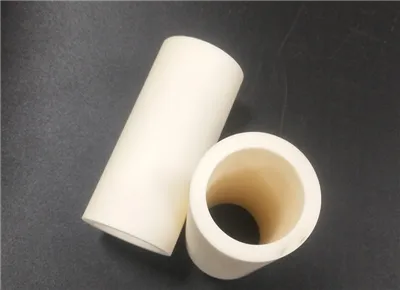
Ceramic Cyclone Spigot Liners protect the internal discharge passage of cyclone spigots from abrasive slurry and solid particles. The liner is produced to the required bore diameter, outside dimensions, length and seating profile, helping maintain the specified underflow opening and fit within the existing spigot assembly.
Where the Spigot Liner Is Used
Cyclone Underflow
Installed at the lower discharge section where concentrated solids exit the cyclone through the spigot. The ceramic liner protects the internal passage exposed to continuous abrasive flow.
Mineral Processing
Used in cyclone systems processing mineral slurry, coal fines, dense medium and other abrasive solid-liquid streams where controlled discharge geometry is required.
Replacement Maintenance
Suitable for replacement projects based on an existing liner, measured component or approved technical drawing. Reference dimensions are used to define the replacement geometry before production.
What Determines the Right Liner
Bore Diameter: The internal bore determines the discharge opening. The required diameter should be confirmed from the existing component or approved drawing.
Liner Length: Overall length follows the available wear zone and installation depth of the spigot, ensuring the ceramic section covers the intended internal surface.
Wall Thickness: Wall thickness is selected according to the required ceramic wear section and available housing space while maintaining the specified internal bore.
Seating Profile: Steps, shoulders, tapers and locating surfaces are matched to the spigot housing to establish the correct installation position.
Ceramic Material Selection
Contains at least 92% Al₂O₃, with a bulk density of at least 3.63 g/cm³ and Mohs hardness of 9.
Contains at least 95% Al₂O₃, with a bulk density of at least 3.68 g/cm³ and Mohs hardness of 9.
Contains at least 97% Al₂O₃, with a bulk density of at least 3.73 g/cm³ and Mohs hardness of 9.
Contains at least 99% Al₂O₃, with a bulk density of at least 3.83 g/cm³ and Mohs hardness of 9.
Technical Parameters
|
Technical Parameters |
92% Alumina |
95% Alumina |
97% Alumina |
99% Alumina |
|
Al₂O₃ content |
≥ 92% |
≥ 95% |
≥ 97% |
≥ 99% |
|
Bulk density |
≥ 3.63 g/cm³ |
≥ 3.68 g/cm³ |
≥ 3.73 g/cm³ |
≥ 3.83 g/cm³ |
|
Water absorption |
≤ 0.01% |
≤ 0.01% |
≤ 0.01% |
≤ 0.01% |
|
Mohs hardness |
9 |
9 |
9 |
9 |
|
Flexural strength |
≥ 240 MPa |
≥ 250 MPa |
≥ 285 MPa |
≥ 300 MPa |
|
Fracture toughness |
4.60 MPa·m¹/² |
4.65 MPa·m¹/² |
5.20 MPa·m¹/² |
5.50 MPa·m¹/² |
Key Product Benefits
Abrasion Protection: The dense alumina ceramic working surface provides a hard wear layer for slurry and solid particles passing through the discharge section.
Bore Retention: Controlled ceramic dimensions help preserve the specified internal opening as abrasive material passes through the spigot.
Profile Matching: Internal and external geometry can follow the required spigot configuration, including stepped, tapered and locating features.
Material Options: Four alumina grades provide different material property levels for applications with varying wear and mechanical requirements.
Dimensional Matching
Existing Liner: An existing liner can provide the bore diameter, outside dimensions, length, wall thickness and seating details required for replacement production.
Equipment Drawing: An approved technical drawing defines critical dimensions, tolerances, profiles and locating features for controlled fabrication.
Measured Component: When original drawings are unavailable, accurate measurements of the existing component can establish the required replacement geometry.
Installation Considerations
Seating Surface
The housing seating area should be clean, continuous and correctly positioned to support stable ceramic installation.
Bore Alignment
The ceramic bore must align with the discharge passage to maintain the specified opening and uninterrupted material flow.
Joint Arrangement
For multi-piece configurations, joint positions are arranged according to the required internal profile and installation geometry.
Quality Control
Material Inspection: Alumina content, density and specified ceramic properties are checked against the selected material grade.
Dimensional Inspection: Bore diameter, outside dimensions, length, wall thickness and seating features are verified against approved drawings or reference records.
Surface Inspection: Ceramic surfaces, edges and locating areas are inspected for dimensional conformity and installation fit.
Information Required for Quotation
Component Data: Provide the spigot drawing, existing liner or measured dimensions, including bore diameter, outside dimensions, length and seating details.
Operating Conditions: Provide the processed material, solids characteristics, slurry conditions and operating temperature to support material and geometry selection.
Replacement Quantity: Specify the required quantity and replacement scope so the liner configuration and production requirements can be confirmed.
Why Geometry Matters
Discharge Control: The spigot liner protects the discharge passage while maintaining the defined internal opening for concentrated solids.
Dimensional Integration: Bore diameter, wall thickness, length and seating geometry must work together to achieve the required fit within the spigot housing.
Passage Stability: Accurate dimensional control helps maintain the intended internal passage and consistent liner positioning during operation.
FAQ
Q: What material is used for cyclone spigot liners?
A: Alumina ceramic grades from 92% to 99% Al₂O₃ are available. Grade selection is based on the required material properties and operating conditions.
Q: Can the liner match an existing spigot?
A: Yes. An existing liner, measured component or approved technical drawing can be used to establish the required bore, outside dimensions, length and seating profile.
Q: What dimensions are required?
A: Key dimensions include bore diameter, outside diameter or housing dimensions, overall length, wall thickness and seating or locating features.
Q: Can the ceramic grade be specified?
A: Yes. The required alumina grade can be specified according to the material and operating requirements of the cyclone system.
Q: Is a technical drawing necessary?
A: A technical drawing provides the clearest dimensional reference. An existing liner or accurate component measurements can also be used when an original drawing is unavailable.
Hot Tags: ceramic cyclone spigot liner, China ceramic cyclone spigot liner manufacturers, suppliers, factory, ceramic liner
You Might Also Like



Send Inquiry