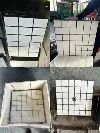
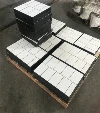
In recent years, with the continuous growth of industrial manufacturing and foreign trade demand, composite lining has gradually become an important material choice in many industries due to its excellent performance and wide application scenarios. Composite lining is a composite material formed by combining different materials, usually composed of metal, ceramic, rubber or other polymer materials, aiming to combine the advantages of multiple materials to meet the use requirements under complex working conditions.
The core technology of composite lining lies in the selection of materials and the optimization of composite process. Common composite methods include explosive welding, rolling composite, hot pressing composite and adhesive composite. Among them, explosive welding is widely used in the manufacture of metal composite linings due to its high efficiency and firmness; while rolling composite is suitable for large-scale production and can achieve a more uniform composite effect. In addition, hot pressing composite and adhesive composite are more used in the production of non-metallic or lightweight composite linings to meet the needs of specific industries.
In the field of foreign trade, the market demand for composite linings continues to grow. Due to its excellent performance in wear resistance, corrosion resistance, impact resistance, etc., composite linings are widely used in mining machinery, metallurgical equipment, shipbuilding, chemical equipment and other industries. Especially under the impetus of the "Belt and Road" initiative, the competitiveness of composite lining products made in China in the international market has been continuously enhanced, and the export volume has been rising year by year.
It is worth noting that the performance of composite lining depends not only on the material itself, but also on its processing technology. When selecting composite lining suppliers, foreign trade enterprises should focus on their technical strength, production process and quality management system. At the same time, with the improvement of environmental protection requirements, the recyclability and sustainability of composite linings have also become important considerations in the foreign trade market.
In the future, with the continuous breakthrough of new material technology, the performance of composite linings will be further improved, and the application field will be more extensive. For foreign trade enterprises, keeping up with the technical development trend of composite linings and optimizing supply chain management will help to occupy a more favorable competitive position in the international market.