Cyclones serve as core classification and dust removal equipment across heavy industries, yet high-speed rotating ore slurry, clinker dust and coal ash trigger severe inner wall abrasion, shortening equipment service cycles and disrupting sorting precision. Ceramic cyclone liners have become the standard upgrade to resolve these long-standing operational pain points, with global market demand growing at an 8.3% CAGR through 2031.
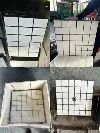
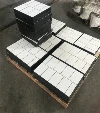
Manufactured from high-purity 92%–95% alumina or zirconia-toughened alumina (ZTA) via high-temperature sintering, ceramic cyclone liners reach Mohs 9 ultra-high hardness, delivering wear resistance 10–20 times higher than bare steel and polyurethane liners. Custom curved tile segments precisely match cyclone cylinder, cone, spigot and vortex finder geometries, forming a seamless smooth inner surface. This dense ceramic lining prevents particle adhesion and blockage, maintaining stable cyclone geometry to sustain over 99.5% consistent solid-gas or solid-liquid separation efficiency for years.
Modular liner design brings remarkable maintenance advantages. Unlike integrated steel or rubber liners that require full disassembly for replacement, damaged ceramic tiles can be individually swapped, slashing plant shutdown time by over 60%. Two mature installation modes are available: high-strength epoxy bonding for low-impact dust cyclones, and rubber-ceramic composite backing for high-impact mineral slurry hydrocyclones, adapting to diverse working conditions from cement kiln waste gas treatment to mine ore grading.
End-user field data verifies obvious economic benefits. Thermal power plants install ceramic liners on fly ash cyclones to extend service life from 6 months to 4 years; cement factories apply curved ceramic segments on raw meal cyclones to cut annual maintenance costs by 45%; gold and iron ore mines adopt ZTA cyclone liners for dense medium separation, lowering recirculating ore loads and boosting overall mill throughput. Chemically inert ceramic material also resists acid and alkali corrosion, suiting chemical and new energy powder processing cyclones.
Leading industrial ceramic manufacturers provide one-stop customized cyclone lining schemes, supporting tailor-made tile sizes, thicknesses and curved shapes based on client equipment drawings. All finished liners pass full batch testing with complete traceability and comply with international ISO quality standards. Robust automated production lines guarantee stable bulk order supply and fast global delivery, while professional engineering teams offer on-site layout guidance for complex cyclone structures.
"Traditional steel and polyurethane liners wear out quickly under high-speed particle erosion, which distorts cyclone shape and ruins classification accuracy," stated a senior wear-resistant ceramics engineer. "Ceramic cyclone liners balance extreme abrasion resistance, stable separation performance and low maintenance cost, making them the most cost-effective lining choice for long-term plant operation."
Driven by global industrial upgrading and stricter emission control regulations, ceramic cyclone liners will expand rapidly into lithium ore sorting and solid waste recycling sectors, retaining steady growth in the global industrial wear protection material market in the next decade.