Frequent equipment abrasion, unplanned downtime and high maintenance expenditure have long plagued enterprises engaged in bulk material transportation and processing. Today, diversified ceramic wear liners have replaced traditional steel, rubber and basalt liners as the mainstream wear-resistant solution, driving steady growth in the global industrial advanced ceramics market.
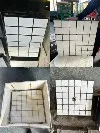
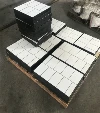
Ceramic wear liners cover a complete product matrix, including standard alumina tiles, hexagonal interlocking liners, ZTA high-toughness panels, magnetic ceramic sheets, composite rubber-ceramic plates, cyclone curved segments and chute lining blocks. Most core products are sintered from high-purity 92%–95% alumina powder, while ZTA variants add zirconia components to boost fracture toughness for heavy-impact working zones. With Mohs 9 ultra-high hardness, their wear resistance is 8–15 times higher than manganese steel, and dense sintered structures offer strong resistance to acid, alkali corrosion and high temperatures up to 1200°C.
The modular design brings remarkable flexibility for all equipment structures. Flat square liners fit silos, pipelines and straight chutes; curved customized segments match cyclone cones and elbows; rubber-backed composite liners absorb heavy material impact; magnetic ceramic liners enable tool-free installation and quick removal for regular inspection. Damaged parts can be replaced separately instead of full lining disassembly, slashing production halt time and labor costs by over 40% compared with integrated metal liners.
End-user demand spans multiple core heavy industries. Mining operators install ceramic wear liners on ore chutes, slurry pipelines and hydrocyclones; cement factories deploy them on raw meal separators and clinker conveying equipment; thermal power plants widely adopt the products for coal ash pipelines and pulverized coal bins. New energy lithium ore processing plants also rely on zero-contamination ceramic liners to avoid metal impurities during powder transportation, improving finished product yield significantly.
Global market research shows the ceramic wear liner market reached USD 1.42 billion in 2025, with a projected 6.7% CAGR through 2033. Manufacturers keep optimizing customized service systems, supplying tailor-made sizes, thicknesses and composite structures according to client equipment drawings. All finished liners pass full batch testing with complete traceability and comply with international ISO quality standards. Robust automated production lines support large bulk orders with stable fast global delivery, alongside one-stop full-set lining design schemes.
"Ceramic wear liners cover nearly all abrasion scenarios from light sliding friction to heavy particle impact," said a senior industrial ceramics engineer. "Though the upfront procurement cost is slightly higher, their ultra-long service life greatly reduces total operating expenditure, making them the most cost-effective lining choice for long-term plant operation."
As global heavy industries pursue high efficiency and low carbon consumption, ceramic wear liners will expand rapidly into solid waste recycling and port bulk handling sectors, maintaining dominant market share in the global wear-resistant material industry in the next decade.