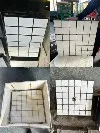
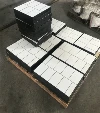
In the field of industrial wear-resistant materials, composite linings have become an important choice for mining, metallurgy, power and other industries due to their excellent wear resistance and impact resistance. However, there are many types of composite linings on the market, and the differences in different materials and processes directly affect their service life and applicable scenarios. Understanding these differences is crucial for purchasing decisions.
Material combination determines basic performance
The core difference between composite linings lies in the combination of substrate and wear-resistant layer. Common substrates include low carbon steel, high manganese steel, etc., while the wear-resistant layer is mostly made of high chromium cast iron, ceramic or polymer materials. Taking high chromium cast iron composite lining as an example, the hardness of its wear-resistant layer can reach HRC60 or above, which is suitable for high impact conditions; while ceramic composite linings rely on the anti-wear properties of ceramic sheets and perform outstandingly in low impact environments. The bonding process of different materials (such as metallurgical bonding, bolt fixing) will also affect the overall strength and anti-shedding ability.
Process differences affect service life
The manufacturing process of composite linings directly affects their performance stability. The hot rolling composite process can achieve molecular-level bonding between the substrate and the wear-resistant layer, significantly improving fatigue resistance; while the lining made by surfacing or spraying process is low in cost, but there may be a problem of weak bonding layer. In addition, surface treatment technology (such as sandblasting and quenching) can further enhance the corrosion resistance and impact toughness of the lining. Users need to choose products that match the process according to the actual working conditions.
Targeted selection of application scenarios
The original design intention of different composite liners determines their applicable fields. For example, high-chromium cast iron composite liners are often used in mining crushing equipment to cope with high-intensity impact; while the conveying system of coal-fired power plants prefers ceramic composite liners because of their high temperature resistance and low friction coefficient. Wrong selection may cause premature wear or breakage of the lining, increasing maintenance costs.
The performance differences of composite liners are reflected in three dimensions: material, process and application adaptability. When purchasing, it is necessary to comprehensively consider the working parameters (such as impact strength, material particle size) and economy. If necessary, the supplier can be required to provide a third-party test report or application case reference. The correct selection can not only extend the life of the equipment, but also significantly improve production efficiency.