


Ceramic Impact Chute Liner
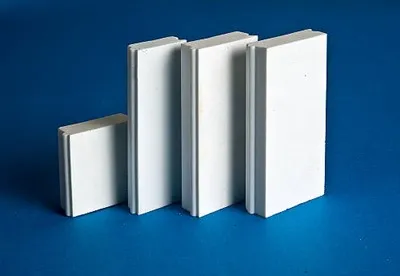
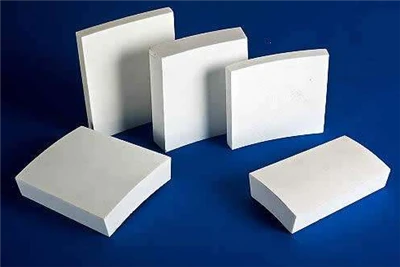
Ceramic Impact Chute Liner is a composite alumina lining for chute areas exposed to direct material impact and abrasive flow. The ceramic layer forms the working wear surface, while rubber, polyurethane or steel-backed construction can be selected according to impact conditions, chute geometry and fixing requirements. Typical applications include transfer chutes, feed zones, discharge sections, hoppers and bulk material handling points.
Where Impact Chute Liners Are Used
Transfer Chutes
Installed at material transfer points where bulk solids change direction and strike the chute wall.
Feed & Discharge Zones
Used in loading and discharge sections where falling material creates concentrated impact on the lining surface.
Hoppers & Bins
Applied to impact zones handling ore, coal, minerals and other abrasive bulk solids.
Industrial Material Handling
Used across mining, mineral processing, coal handling, cement, steel and port material handling systems.
Construction Options
Ceramic + Rubber
Alumina ceramic tiles are integrated with a rubber backing. The ceramic handles abrasive contact while the elastic layer provides impact absorption between the wear surface and chute structure.
Ceramic + Polyurethane
Polyurethane-backed construction provides an alternative composite structure for applications requiring controlled backing properties and a compact panel arrangement.
Ceramic + Rubber + Steel
A steel backing plate adds structural support and provides a rigid base for specified mechanical fixing methods.
Key Performance Properties
Alumina Wear Surface
92% and 95% Al₂O₃ ceramic grades are available for abrasive material flow. Ceramic density is approximately 3.6–3.7 g/cm³.
Mechanical Properties
Typical ceramic specifications include compressive strength of at least 850 MPa, Rockwell hardness of 85–86 HRC and fracture toughness of at least 4.8 MPa·m¹/².
Composite Structure
The backing layer separates the ceramic wear surface from the chute shell and is selected according to impact conditions, panel structure and installation requirements.
Technical Specifications
|
Parameter |
Specification |
|
Alumina content |
92% / 95% Al₂O₃ |
|
Ceramic density |
3.6–3.7 g/cm³ |
|
Ceramic hardness |
85–86 HRC |
|
Compressive strength |
≥850 MPa |
|
Fracture toughness |
≥4.8 MPa·m¹/² |
|
Ceramic thickness |
1.5–50 mm |
|
Ceramic tile size |
10 × 10 to 150 × 100 mm |
|
Steel backing thickness |
3–10 mm |
|
Panel size |
200 × 200 to 600 × 600 mm |
|
Available construction |
Ceramic / ceramic + rubber / ceramic + rubber + steel |
How to Select the Liner
Impact Conditions
Material size, bulk density and drop height affect the impact load applied to the lining. These conditions help determine ceramic thickness and backing construction.
Wear Pattern
Sliding material flow produces different wear from direct impact. The ceramic layout should cover the active wear zone and follow the direction of material movement.
Chute Profile
Panel dimensions and total lining thickness must fit the chute geometry without restricting the material passage. Curved and irregular sections may require shaped or segmented panels.
Operating Temperature
The backing material must match the actual process temperature. Standard rubber-backed construction is specified for -40°C to 100°C.
Installation & Replacement
Panel Layout: Panel dimensions and ceramic arrangement can be matched to the chute surface. Modular panels are suitable for replacement in defined wear zones.
Fixing Method: Bonding, bolting, welded studs or combined fixing arrangements can be selected according to the backing structure and chute shell.
Replacement Planning: High-impact sections can be divided into individual panels so that defined wear areas can be removed and replaced during scheduled maintenance.
What to Specify for Quotation
Chute Details: Provide the chute type, lining location, internal dimensions and available installation space.
Material Conditions: Material type, approximate particle size, bulk density, drop height and flow condition help establish the required lining structure.
Operating Temperature: State the normal operating temperature and any temperature variation during production or shutdown conditions.
Dimensions & Drawings: Panel dimensions, ceramic thickness, total thickness, fixing positions and chute drawings can be used to confirm the final configuration.
Quality & Manufacturing Control
Ceramic Properties: Alumina content, density, hardness and mechanical properties are checked against the selected ceramic specification.
Dimensional Inspection: Ceramic thickness, panel dimensions, backing thickness and fixing positions are checked against the required configuration.
Composite Assembly: Ceramic arrangement, backing condition and panel assembly are inspected before final packing to maintain dimensional and structural consistency.
FAQ
Q: What determines the required ceramic thickness?
A: Material size, drop height, impact concentration and abrasive flow are the main factors used to establish ceramic thickness and backing construction.
Q: Can the liner match an existing chute?
A: Yes. Existing liner dimensions, chute drawings, fixing positions or installation measurements can be used to establish the replacement configuration.
Q: Which alumina grades are available?
A: 92% and 95% Al₂O₃ grades are available. The appropriate grade is selected according to the ceramic specification and operating conditions.
Q: Which construction is suitable for impact areas?
A: Ceramic + rubber and ceramic + rubber + steel configurations provide a composite structure for areas where impact and abrasion occur together. The final configuration depends on the chute structure and operating conditions.
Q: Can panel dimensions be customized?
A: Yes. Panel size, ceramic arrangement, ceramic thickness and fixing details can be specified according to the chute geometry and installation requirements.
Hot Tags: ceramic impact chute liner, China ceramic impact chute liner manufacturers, suppliers, factory, ceramic liner
Previous
ZTA Ceramic Chute LinerYou Might Also Like




Send Inquiry