


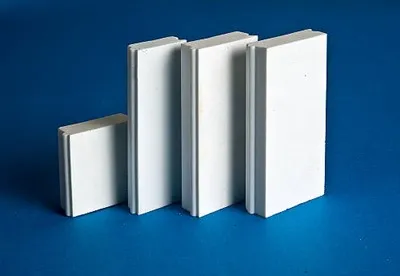
Ceramic Discharge Chute Liner
abrasive bulk solids. It protects discharge surfaces exposed to sliding abrasion, material impact and concentrated flow. Alumina grades from 92% to 99% Al₂O₃ are available with different thicknesses, tile dimensions and fixing configurations to match chute geometry and operating conditions.
Where It Is Used
Discharge Chutes
Installed on chute walls, outlet sections and discharge areas where abrasive solids continuously contact the lining surface.
Crusher Discharge Areas
Applied below crushing stages where coarse ore, rock and mineral particles create repeated impact and sliding contact.
Bulk Material Systems
Used in coal, cement, aggregates and mineral handling systems where continuous material flow causes surface wear.
Main Wear Conditions
Sliding Abrasion
Particles moving along the chute create repeated contact with the lining. Alumina ceramic provides a hard wear surface for continuous sliding conditions.
Material Impact
Coarse particles falling onto a discharge section can create concentrated impact. Ceramic thickness and support conditions should be selected for the actual drop zone.
Flow Concentration
Outlet areas, bends and direction changes can receive more material contact than adjacent surfaces. Liner layouts can therefore be divided according to wear zones.
Ceramic Material Options
Alumina Content
Alumina grades from 92% to 99% Al₂O₃ provide different material properties for varying abrasion conditions.
Ceramic Density
Typical alumina ceramic density is approximately 3.6–3.9 g/cm³, depending on the selected grade.
Liner Form
Flat tiles, curved pieces and shaped ceramic sections can be arranged to follow different chute profiles and installation areas.
Key Specifications
|
Parameter |
Specification |
|
Alumina content |
92–99% Al₂O₃ |
|
Ceramic hardness |
Up to approx. 9 Mohs |
|
Ceramic density |
Approx. 3.6–3.9 g/cm³ |
|
Ceramic thickness |
6–50 mm |
|
Tile length |
10–300 mm |
|
Tile width |
10–300 mm |
|
Liner shape |
Flat, curved or shaped |
|
Fixing method |
Adhesive, mechanical or combined |
How to Select the Liner
Material Characteristics: Particle size, hardness, moisture content and flow behavior determine the main wear mechanism and ceramic requirements.
Impact Conditions: Drop height, particle size and impact concentration should be considered when selecting ceramic thickness and support configuration.
Chute Geometry: Straight, inclined, curved and tapered sections may require different tile sizes or shaped ceramic pieces.
Internal Clearance: The liner thickness must fit within the available chute clearance while maintaining the required material passage.
Liner Thickness
Moderate Wear Zones
Standard thickness configurations can be used in areas dominated by sliding abrasion with controlled impact.
High-Wear Zones
Greater ceramic thickness can be specified for concentrated discharge paths, coarse particles and higher material loading.
Limited Clearance
Reduced-thickness ceramic sections can be selected where internal dimensions restrict the available lining space.
Thickness should be based on wear conditions, impact level and available clearance rather than chute size alone.
Quality Control Points
Adhesive Bonding
Suitable for prepared chute surfaces where a low-profile ceramic lining is required.
Mechanical Fixing
Mechanical retention can be used where the chute structure or maintenance conditions call for additional physical support.
Sectional Layout
Tiles can be arranged around bends, joints, access areas and different wear zones to match the chute structure.
Application Areas
Mining & Mineral Processing
Used in ore discharge chutes, crusher discharge sections, transfer points and mineral handling systems.
Cement & Aggregates
Applied to limestone, clinker, sand, gravel and other abrasive materials moving through discharge equipment.
Coal Handling
Used in discharge sections and material flow areas exposed to repeated contact with coal and associated mineral particles.
Bulk Material Handling
Applied to chutes, hoppers and outlet sections carrying abrasive solids under continuous flow.
What Should Be Confirmed Before Production
Chute Dimensions
Provide chute length, width, wall angle, lining area and available installation clearance.
Material Data
Material type, particle size, flow rate, drop height and operating temperature help establish the working conditions.
Existing Liner
Existing liner dimensions, drawings or worn pieces can help determine replacement size and layout.
Fixing Method
The available bonding or mechanical fixing arrangement should be confirmed before the liner configuration is finalized.
Quality Control Points
Material Grade
Alumina content is checked against the specified ceramic grade.
Dimensional Accuracy
Length, width and thickness are checked against approved dimensions.
Ceramic Condition
Ceramic pieces are inspected for visible cracks, edge damage and surface irregularities.
Assembly Fit
Shaped and sectional liners are checked against the approved layout and installation dimensions.
Replacement Planning
Wear-Zone Records: Recording high-wear locations helps establish suitable ceramic thicknesses and tile arrangements for future replacement.
Sectional Replacement: Dividing the lining into practical sections allows worn areas to be replaced according to the actual condition of each zone.
Dimensional Records: Previous drawings, liner dimensions and installation records provide useful references for repeat replacement orders.
Technical Enquiry Information
For technical evaluation, provide:
- Chute drawing or liner dimensions
- Material type
- Particle size
- Approximate flow rate
- Drop height
- Chute angle
- Operating temperature
- Existing liner thickness
- Fixing method
- Required quantity
These details allow the ceramic grade, thickness, dimensions and liner configuration to be matched to the discharge chute.
FAQ
Q: What materials are suitable for Ceramic Discharge Chute Liners?
A: They are commonly used for abrasive bulk solids such as ore, rock, coal, limestone, clinker, aggregates and mineral materials.
Q: What alumina grades are available?
A: Alumina ceramic grades from 92% to 99% Al₂O₃ are available. Selection depends on material characteristics and operating conditions.
Q: Can the liner match an existing chute?
A: Yes. Tile dimensions and shaped sections can be specified from chute drawings, existing liner dimensions or measured installation areas.
Q: How is ceramic thickness selected?
A: Thickness is determined by abrasion level, particle size, impact conditions, material flow, available clearance and the specific wear zone.
Q: What information is needed for a technical quotation?
A: A chute drawing or liner dimensions, material information, operating conditions, fixing method and required quantity provide the basic information for technical evaluation.
Hot Tags: ceramic discharge chute liner, China ceramic discharge chute liner manufacturers, suppliers, factory, ceramic liner
You Might Also Like



Send Inquiry