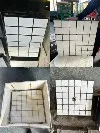
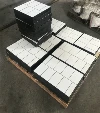
In the links of mining and material transportation, equipment wear has always been a core pain point restricting production efficiency and increasing operation and maintenance costs. With the wide application of new protective materials such as alumina wear-resistant ceramics, this industry problem has been effectively solved. It is learned from the recently held Mine Machinery Technology Upgrade Forum that wear-resistant ceramics, with their characteristics of ultra-high hardness and excellent wear resistance, have become the "preferred solution" for mine equipment protection, helping the industry achieve cost reduction, efficiency improvement and green transformation.
The mine operation environment is harsh. Key equipment such as silos, chutes, conveying pipelines and crushers are long-term subjected to high-frequency impact and strong scouring of hard materials such as ore and slag. Traditional protective materials such as ordinary steel plates and rubber liners are prone to wear and fall-off. This not only requires frequent shutdowns for replacement, but may also cause potential production safety hazards due to equipment failures. "Taking a mine belt conveyor line with an annual transportation capacity of 5 million tons as an example, the traditional steel plate liners need to be replaced every 3 to 6 months on average, the cost of a single replacement exceeds 100,000 yuan, and the annual operation and maintenance costs remain high." Mr. Wang, the person in charge of equipment in a large iron mine, told reporters frankly.
In response to the extreme wear resistance requirements of mines, alumina wear-resistant ceramics have stood out with unique advantages. According to industry experts, the hardness of alumina wear-resistant ceramics can reach more than HRA85, and their wear resistance is 5 to 20 times that of ordinary steel plates, which can greatly extend the service life of equipment protection. At the same time, its surface has high smoothness, which can reduce material transportation resistance and power consumption by 5% to 15%; combined with optimized structures such as welded plates and perforated fixation, it can also achieve firm installation, effectively resist high-frequency impact, reduce the fall-off rate by more than 80%, and is suitable for core wear parts such as mine crusher hoppers, chute elbows and conveying pipelines.
In the upgrading and transformation project of a large coal mine in Shanxi, the mine installed alumina wear-resistant ceramic liners on key parts such as silos and chutes of its 3 main conveyor lines. The person in charge of the project said that after the transformation, the service life of equipment protection has been extended from the original 3 months to more than 2 years, the annual shutdown maintenance time has been reduced by more than 40 hours, and the comprehensive operation and maintenance costs have been reduced by more than 60%. At the same time, it has avoided environmental risks such as material leakage caused by liner fall-off, achieving dual improvement of economic and ecological benefits.