When we think of ceramics, what often comes to mind are daily household items - bowls, plates, and other decorative wares that have long symbolized Chinese craftsmanship. However, in modern industry, ceramics have evolved far beyond daily use. Today, a new generation of materials known as special ceramics (also called advanced ceramics or technical ceramics) is playing an increasingly important role in industries such as steel, cement, power, mining, and engineering machinery.
What Are Special Ceramics?
The term "special ceramics" first appeared in the 1950s in the United Kingdom. Unlike traditional ceramics, which are primarily used for decorative or household purposes, special ceramics are engineered materials made from highly refined synthetic or chemically processed raw materials, such as alumina (Al₂O₃), zirconia (ZrO₂), and silicon carbide (SiC).
Different countries have different names for them:
In the UK, they are known as technical ceramics
In the USA, as advanced ceramics or high-performance ceramics
In Japan, as fine ceramics
In China, they are widely referred to as special ceramics or industrial ceramics
How Special Ceramics Differ from Traditional Ceramics
Raw Materials – Traditional ceramics use natural minerals such as clay, quartz, and feldspar, while special ceramics rely on synthetic materials with precisely controlled chemical compositions.
Structure & Purity – Special ceramics feature a denser and more uniform microstructure, with fewer impurities and pores, resulting in superior hardness, strength, and corrosion resistance.
Performance – Traditional ceramics serve aesthetic or daily purposes, whereas special ceramics are designed for specific industrial functions, such as high-temperature resistance, wear protection, and insulation.
Manufacturing Process – The production of special ceramics involves advanced forming and sintering techniques - including isostatic pressing, injection molding, precision grinding, and polishing - ensuring strict dimensional accuracy and consistent quality.
Applications – While traditional ceramics are used in tableware or decoration, special ceramics are essential in industrial wear protection, high-temperature environments, and electronic components, breaking the limits of conventional ceramic use.
Dongci Technology: A Trusted Supplier of Special Ceramics
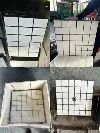
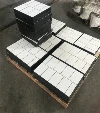
As one of China's early and large-scale manufacturers of special ceramics, Dongci Technology has been dedicated to research, development, and production for nearly 30 years. The company specializes in wear-resistant alumina ceramics, offering products with excellent hardness, strength, and durability.
Dongci's ceramic liners and tiles are widely applied in:
Steel, cement, power generation, mining, port, coal, and smelting industries
Bulk material handling and transfer systems
Engineering machinery and chemical equipment
With high resistance to wear, corrosion, and impact, Dongci's ceramics have earned a solid reputation among clients worldwide, being exported to Southeast Asia, Europe, the United States, and Australia.
Our customers describe Dongci ceramics as "truly resistant to wear and built to last."
Tecera – Committed to Quality, Innovation, and Global Service.