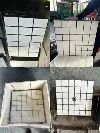
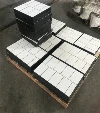
In modern industrial production, lining, as an important wear-resistant component, is widely used in mining, metallurgy, electricity, building materials and other fields. Its main function is to protect the main structure of the equipment from material impact, friction and wear, thereby extending the service life of the equipment and improving production efficiency. With the continuous advancement of industrial technology, the material and design of the lining are also continuously optimized to meet the needs of different working conditions.
The core function of the lining
The primary function of the lining is wear protection. In industrial machinery such as crushers, mills, and conveying equipment, the impact and friction of materials can cause serious wear on the inner wall of the equipment. Liners are usually made of high-hardness, high-wear-resistant materials such as manganese steel, high-chromium cast iron or composite materials, which can effectively absorb impact energy and reduce wear, thereby protecting the main structure of the equipment.
Secondly, the lining can also improve the efficiency of the equipment. In the mill, the shape and arrangement of the lining directly affect the movement trajectory of the grinding medium, and then affect the grinding efficiency. By optimizing the lining design, the fluidity and grinding effect of the material can be improved, the production efficiency can be improved and the energy consumption can be reduced.
In addition, the liner also has the function of shock absorption and noise reduction. In equipment such as crushers and vibrating screens, the liner can absorb part of the impact energy, reduce equipment vibration and noise, and improve the working environment.
Development trend of liner materials
In the early days, the liner mainly used ordinary cast steel or high manganese steel. Although the cost was low, the wear resistance was limited. With the advancement of materials science, high chromium cast iron, alloy steel and ceramic composite materials have gradually become the mainstream choice. These new materials have higher hardness and wear resistance, while taking into account a certain toughness, and can adapt to more severe working conditions.
In the future, the development of liners will pay more attention to customization and intelligence. Through 3D printing technology, more complex liner structures can be manufactured to meet the wear requirements of specific equipment. At the same time, the application of intelligent monitoring technology will also make the wear state of the liner controllable in real time, further improving the maintenance efficiency of the equipment.
Although the liner is small, it plays an indispensable role in industrial production. With the continuous advancement of technology, the performance of the liner will be further improved, providing a stronger guarantee for the efficient and stable operation of various industries.