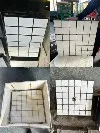
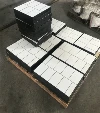
December 10, 2025 - Tecera proudly hosted an engaging and informative training session for its international trade personnel, focused on enhancing knowledge about grinding media and the applications of alumina ceramic balls. This initiative reflects Tecera's commitment to continuous learning and excellence in serving the global marketplace.
During the session, experts introduced participants to the latest advancements in grinding media technologies and the versatile uses of alumina ceramic balls across various industries. Team members gained valuable insights into product features, quality standards, and application benefits, equipping them with the expertise to better support clients and promote Tecera's high-performance materials worldwide.
Tecera looks forward to continuing its investment in professional development and delivering top-tier products that meet the evolving needs of global customers. The company remains committed to excellence in both technology and service, strengthening its position as a trusted leader in the ceramics industry.
The following are some of the training contents:
In China, over 85% of iron ore requires a two-stage grinding process, and approximately 30% requires a three-stage grinding process. Based on the current industry average beneficiation ratio of 3, a rejection rate of 50%, an electricity consumption of 6 kWh per ton for the two-stage grinding process, 8 kWh per ton for the three-stage grinding process, and a beneficiation enrichment ratio of 1.3 after the three-stage grinding, the total installed power capacity of two-stage mills for domestic iron ore processing is 260,800 MWh, while that of three-stage mills is 106,300 MWh.
As a new type of grinding medium, ceramic balls have demonstrated remarkable performance in iron ore two-stage ball milling applications. When used in both vertical mills and ball mills, they can reduce energy consumption by over 30%. If ceramic balls were to fully replace steel balls in the two-stage grinding of iron ore, it could save up to 620 million kWh of electricity per year. Similarly, a complete switch to ceramic balls in the three-stage grinding of iron ore could result in an annual energy saving of 253 million kWh.
If you find the above figures a bit abstract, let's take a look at the following set of metrics for a clearer picture.
| Item | Category | Before Application | After Application | Increase Value | Increase Rate |
| Ore Grade/% | TFe | 36.5 | 36.96 | 0.46% | 1.30% |
| Product Grade/% | Iron Concentrate | 65.08 | 65.57 | 0.49% | 0.80% |
| Recovery Rate/% | Iron Concentrate | 81.08 | 83.86 | 2.78% | 3.40% |
| Hourly Output/(t/h) | Full Production Mode | 329.5 | 356.5 | 27 | 8.19% |
| Power Consumption/(kWh/t) | Second Stage | 2.1 | 1.47 | -0.63 | 30% |
| Ball Consumption/(Yuan/t) | Second Stage | 1.14 | 0.533 | -0.607 | 53.25% |
| Mill Utilization Coefficient/(t/h·m³) | Second Stage | 1.02 | 2.13 | 1.11 | 108.82% |
From the data above, we can clearly see the outstanding performance of the new grinding technology, which can be summarized into several key points:
1. Increased Mill Throughput: The hourly processing capacity of the ball mill has improved from 329.5 t/h to 356.5 t/h, representing an increase of 8.19%.
2. Significantly Improved Particle Size Distribution of Classified Overflow: Under the same fineness of classified overflow, the yield of easily selectable qualified particle sizes has increased, and the relative degree of overgrinding has decreased by 39.97%, which is beneficial for subsequent tailings backfilling operations.
3. Improved Grade and Recovery Rate: The grade of iron concentrate has increased by 0.49%, and the recovery rate has risen by 2.78%.
4. Significant Energy Savings in Grinding: While maintaining the grade of iron concentrate and the mill throughput, the specific power consumption has been reduced by 30%.
5. Noticeable Reduction in Grinding Media Costs: After adopting ceramic ball grinding technology, the media cost has dropped by 53.25%.
6. Marked Improvement in Classification Efficiency and Mill Utilization: In the grinding-classification circuit, classification efficiency and mill utilization coefficient have significantly improved. The mill utilization coefficient has increased by 108.82%, the classification volumetric efficiency has risen by 30.84%, the classification mass efficiency by 67.63%, and the classification sand return ratio has decreased by 41.45%.
7. Beyond these technical improvements, the engineering application of this new grinding technology at the Longqiao Iron Mine has achieved substantial energy savings, cost reductions, and efficiency gains. It has also contributed to a quieter working environment, with noise levels reduced by 2–6 dB, thereby lowering the risk of occupational diseases among workers. Additionally, it has decreased the cost of reagents used in tailings backfilling, delivering significant social and environmental benefits. At the same time, this advancement has driven progress in the grinding technology of the mining industry as a whole, reaching an internationally leading level.
Small as they are, these ceramic balls may lack dazzling brilliance, graceful forms, or even the aura of being "a once-in-four-thousand-years rarity." Yet, they continue to play a vital role in critical production processes-helping enterprises reduce costs, easing the environmental burden on society, and advancing industrial progress for the nation.
This humble yet pragmatic spirit is remarkably reflective of their manufacturer: Tecera International Co., Ltd.