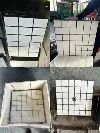
In modern industrial production, catalyst carriers, as the core supporting materials for chemical reactions, directly affect catalytic efficiency, reaction stability and equipment life. With the tightening of environmental regulations and the improvement of energy efficiency requirements, efficient and durable catalyst carrier solutions have become key needs in the fields of chemical industry, energy, environmental protection, etc.
The core function of catalyst carriers is to provide dispersed support for active components while enhancing thermal stability and mechanical strength. Although traditional carriers such as alumina and silica are widely used, they are prone to performance degradation under high temperature and strong corrosion environments. In recent years, new composite materials such as silicon carbide, molecular sieves and metal organic frameworks (MOFs) have gradually emerged. With high specific surface area, excellent chemical inertness and customizable structure, they have become the first choice for high-end applications.
For different industrial scenarios, the optimization of catalyst carriers needs to comprehensively consider load capacity, mass transfer efficiency and anti-poisoning performance. For example, in petroleum refining, carriers with high mechanical strength can reduce reactor pressure drop; in the field of exhaust gas treatment, high temperature resistant carriers can adapt to the harsh conditions of SCR denitrification systems. In addition, the pore structure design of the carrier directly affects the diffusion rate of the reactants, and the microporous-mesoporous composite structure has become an important direction for improving catalytic selectivity.
At present, the global catalyst carrier market is developing towards high performance and greenness. The surface modification of the carrier by nanotechnology can significantly enhance the dispersibility of the active components; and the introduction of additive manufacturing technologies such as 3D printing provides new possibilities for the customized production of complex structure carriers. It is worth noting that the recycling and reuse of carriers has also become the focus of the industry. The extension of service life through surface regeneration technology can significantly reduce industrial operating costs.
In the future, with the integration of new materials and intelligent manufacturing technologies, catalyst carriers will more accurately match the needs of subdivided fields. Whether it is energy conversion or pollution control, efficient carrier solutions will become one of the core driving forces for the sustainable development of industry.