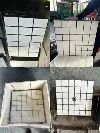
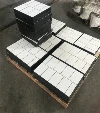
Wear-resistant ceramics, with their advantages of high hardness, wear resistance and corrosion resistance, have mature and typical application cases in various industrial fields such as mining, electric power, metallurgy and chemical industry. They not only solve the pain point of easy wear of equipment but also significantly reduce the operation and maintenance costs of enterprises. The following are specific cases by industry:
1. Mining Industry
Renovation of Ore Conveying Chutes: The ore conveying chutes of a large open-pit mine were originally made of metal materials. Due to the sharp edges and strong impact of ore, they needed to be replaced every 3 months. After reconstructing the chutes with large thick tiles made of high-purity alumina, their ultra-high hardness effectively resisted the impact and cutting wear of ore, extending the service life to more than 1 year. The frequency of equipment maintenance was greatly reduced, and the continuous production of ore mining was guaranteed.
Protection of Tailings Conveying Equipment: Mine tailings contain high-hardness particles and are corrosive. Traditional metal tailings pumps and pipelines are extremely prone to damage, and there is a risk of material leakage causing environmental pollution. A mine selected silicon carbide ceramics to make tailings pumps and conveying pipelines. The high wear resistance and chemical stability of silicon carbide enabled the equipment to not only cope with particle scouring but also resist corrosion. The replacement cycle of pipelines and pump bodies was extended from 6 months to more than 3 years, and the conveying efficiency was also significantly improved.
2. Electric Power Industry
Protection of Coal Conveying Systems in Thermal Power Plants: The coal conveying pipelines and chutes of a thermal power plant were scoured by coal blocks for a long time, frequently experiencing wear and leakage problems, and requiring shutdown maintenance 2-3 times a month. Later, after installing alumina ceramic liners on the inner walls of these components, the wear amount during coal flow conveying was greatly reduced, material leakage and blockage problems were basically eliminated, and the equipment maintenance frequency was reduced to once a quarter. The operation and maintenance cost of the power plant was reduced by 40%, and the stable operation of the coal conveying system was guaranteed at the same time.
High-Temperature Wear Resistance Renovation of Boiler Flues: The high-temperature fly ash in the boiler flues of power plants has a high flow rate, causing severe wear to the inner walls of the flues, and the high-temperature environment exacerbates the aging of metal components. After reconstructing the inner walls of the flues with alumina ceramic liners, the ceramic materials maintain stable performance in high-temperature environments, which can not only resist fly ash scouring but also reduce heat loss, extending the service life of the flues from 2 years to more than 5 years.
3. Metallurgical Industry
Application of Ceramic Work Rolls in High-Temperature Rolling Mills: In the scenario of aluminum pipe welding and rolling (800-1000℃, 500MPa), traditional tungsten steel rolls are prone to plastic deformation at high temperatures, with a diameter deviation of 0.3mm after continuous operation, requiring frequent replacement and adjustment. After switching to silicon nitride ceramic work rolls, the diameter deviation was still less than 5μm after 1200 hours of continuous operation. When rolling titanium alloy ultra-thin plates (0.1mm in thickness), the ceramic rolls controlled the plate thickness tolerance within ±0.5μm, directly helping to increase the yield rate of aero-engine blades to 99.9%.
Protection of Blast Furnace Linings: The blast furnace linings of an iron and steel plant are eroded and scoured by high-temperature molten iron and slag for a long time. Traditional refractory materials require major maintenance once a year, affecting production progress. After using alumina ceramics as the blast furnace lining material, its high melting point and high-temperature stability can withstand long-term high-temperature baking, and at the same time resist the scouring of materials in the furnace. It not only extended the service life of the furnace lining to more than 3 years but also reduced heat loss and improved the energy utilization efficiency of the blast furnace.
4. Chemical Industry
Upgrading of Hydrochloric Acid Conveying Pipelines: The hydrochloric acid conveying pipelines of a chemical enterprise were originally made of corrosion-resistant metal materials. Due to the strong corrosion of hydrochloric acid and the scouring effect during flow, the pipelines needed to be replaced every 6 months, and there was a risk of leakage. After replacing with silicon carbide ceramic pipelines, the ceramic materials have extremely strong chemical stability, which can withstand the long-term erosion of hydrochloric acid and resist material scouring. The pipeline replacement cycle was extended to more than 3 years, greatly reducing the risk of production interruption caused by pipeline damage.
Protection of Stirring Components in Reactors: In the acid-base reactors of a chemical enterprise, the stirring components have to withstand the erosion of strong corrosive media and the mechanical stress during stirring, and traditional metal components are prone to corrosion and damage. After changing the stirring components to zirconia ceramic materials, the high fracture toughness and chemical stability of zirconia enable them to stably bear mechanical stress in strong corrosive environments. The replacement cycle of the components was extended from 3 months to 2 years, and the product pollution caused by metal corrosion was also avoided.
5. Cement and Building Materials Industry
Wear Resistance Renovation of Cement Vertical Mill Systems: Components such as the feed chutes of raw meal vertical mills and the guide vanes of classifiers in a cement plant were continuously scoured by materials such as limestone particles, and the original metal components suffered severe wear after 4-6 months of use. After pasting alumina ceramic liners on these parts, the wear resistance of the components was greatly improved, and the service life was extended to more than 2 years; at the same time, after installing ceramic liners on the impellers of circulating fans, the operation stability of the fans was significantly improved, and the maintenance cost was reduced by 50%.
Protection of Clinker Conveying Pipelines: Cement clinker has high temperature and hardness, so the conveying pipelines and elbows wear extremely fast. After replacing traditional metal pipelines with alumina ceramic composite pipelines, the pipelines can withstand the scouring of high-temperature clinker, and the original replacement cycle of about 1 year was extended to 4 years. In addition, the risk of clinker leakage was reduced, ensuring the continuous operation of the cement production process.