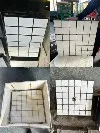
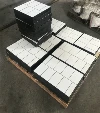
With the advancement of industrial technology, lined ceramic products have been widely used in chemical, energy, metallurgy and other fields due to their excellent corrosion resistance, high temperature resistance and wear resistance. However, the particularity of this type of product also puts higher requirements on logistics and transportation. Understanding its logistics characteristics will help companies optimize supply chain management and ensure safe and efficient delivery of products.
1. Fragility and packaging requirements
The main material of lined ceramic products is ceramic, which has high hardness but high brittleness and weak impact resistance. During transportation, collision or vibration may cause the product to crack or even break. Therefore, the packaging design must fully consider buffer protection. Common packaging methods include multi-layer foam, air cushion or customized wooden boxes, and shockproof materials are used to fix the product inside to avoid displacement and collision during transportation. In addition, the outer packaging needs to be marked with the "fragile" logo to remind the logistics link to operate carefully.
2. Weight and transportation cost
Ceramic products have a high density, especially large lining parts, and the weight of a single piece may reach hundreds of kilograms or even tons. This directly increases the transportation cost, especially the sea or air transportation costs in international logistics. Enterprises need to choose the appropriate mode of transportation according to the size and weight of the product. For example, heavy goods are more suitable for full container load (FCL) by sea, while small batch orders can consider air or less than container load (LCL) by land. At the same time, reasonable planning of loading schemes and improving space utilization can also effectively reduce unit transportation costs.
3. Adaptability to special environments
Some lined ceramic products are used in high temperature or corrosive environments, and their logistics process must also avoid extreme conditions. For example, long-term exposure to the sun may cause aging of packaging materials, and humid environments may corrode metal fixtures. Therefore, temperature and humidity must be controlled during storage and transportation, and the packaging must be well sealed. For export products, they must also meet international transportation standards, such as special requirements such as moisture-proof and anti-static.
4. Customs clearance and certification
Lined ceramic products may involve special industry certifications, such as corrosion resistance test reports in the chemical industry or high temperature resistance certifications in the metallurgical industry. In cross-border logistics, these documents are important bases for customs clearance. Enterprises need to prepare complete technical information and compliance certificates in advance to avoid delays due to incomplete documents.
In summary, the logistics management of lined ceramic products needs to comprehensively consider multiple factors such as packaging, weight, environmental adaptability and compliance. Through scientific logistics planning, enterprises can significantly improve transportation efficiency, reduce risks, and provide customers with more reliable service guarantees.