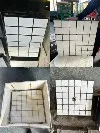
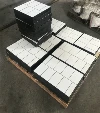
A Reliable Solution for High Wear and Heavy Impact
Bucket wheel excavators are core equipment in bulk material handling systems, widely used in mining, coal, and port terminals. They operate continuously under extremely abrasive and high-impact conditions. The performance of the liners directly affects equipment life and operational efficiency. Alumina ceramic liners have become a proven solution to these challenges.

Severe Working Conditions of Bucket Wheel Liners
In mining applications, liners face a combination of harsh conditions:
Heavy abrasion: Hard and sharp materials such as ore and coal create constant sliding and rolling wear, resulting in rapid material loss on traditional steel liners.
Strong impact: Large lumps falling from height or colliding with components generate high impact forces, causing cracking or deformation.
Corrosion and oxidation: Moist, acidic, alkaline, or high-temperature environments accelerate corrosion of common metal liners.
These factors often lead to short service life, frequent replacements, increased maintenance costs, and reduced system stability.
Wear Mechanism
Liners mainly suffer from a combination of high-stress abrasive wear and impact wear. Hard particles cut and fatigue the liner surface, while repeated impact initiates and expands micro-cracks, speeding up liner failure.
Why Alumina Ceramic Liners Are the Ideal Choice
Alumina ceramic liners are engineered to withstand extreme abrasive and impact conditions. Their key advantages include:
Exceptional wear resistance
With hardness above HRA 85, alumina ceramics offer wear resistance dozens of times higher than manganese steel, significantly extending liner service life.
Improved impact toughness
High-strength ceramic materials absorb impact energy and prevent brittle failure or delamination during heavy material loading.
Outstanding chemical stability
Alumina ceramics resist acids, alkalis, and solvents, making them suitable for wet, hot, or corrosive environments.
Ceramic liners can be installed by bolts or adhesive bonding. For severe mining conditions with larger impact forces, a thickness over 30 mm is recommended to ensure stability and long-term performance.