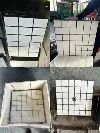
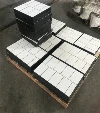
In modern industrial production, linings are widely used as key components in mining, metallurgy, electricity, building materials and other fields. Its excellent performance and diverse functions make it an important guarantee for improving equipment efficiency and extending service life. This article will explore the core advantages of linings in depth to help industry practitioners better understand their value.
Excellent wear resistance and reduced maintenance costs
The primary advantage of linings is their excellent wear resistance. Whether it is ore crushing, metal smelting or material transportation, the equipment is in a high-intensity friction environment for a long time, which ordinary materials cannot withstand. High-quality linings are made of high-hardness alloys or composite materials, which can effectively resist wear and significantly extend the service life of equipment. This feature directly reduces the maintenance frequency and replacement costs of enterprises and improves the continuity and stability of production lines.
Strong impact resistance and adaptability to harsh working conditions
In scenarios such as mining crushing or metallurgical rolling, equipment often faces severe impact and heavy load pressure. Through special heat treatment processes and structural designs, linings have excellent impact resistance and can withstand high-intensity external forces without deformation or breakage. This feature makes it an ideal choice for high-load operating environments, ensuring that the equipment can still operate efficiently under extreme conditions.
Corrosion resistance and high temperature resistance, broadening application scenarios
Some industrial environments have harsh conditions such as strong acids, strong alkalis or high temperatures, and ordinary materials are prone to corrosion or failure. Liners can resist chemical erosion and high-temperature oxidation by selecting corrosion-resistant alloys or ceramic composites, and are suitable for special fields such as chemical industry and power. This feature not only improves the safety of the equipment, but also reduces the risk of downtime caused by environmental factors.
Customized design to meet diverse needs
Modern liner production has achieved a high degree of customization and can be accurately matched according to the size, working conditions and material properties of different equipment. Whether it is a curved liner, a stepped liner or a composite liner, the crushing efficiency or conveying capacity of the equipment can be improved through optimized design. This flexibility enables the liner to adapt to a wide range of needs from small machinery to large industrial equipment.
Liners have become an indispensable key component in the industrial field due to their advantages such as wear resistance, impact resistance, corrosion resistance and customization. With the advancement of materials science, the performance of the liner will be further improved, providing a more solid guarantee for efficient production in various industries.