As an indispensable wear-resistant component in industrial production, liner is widely used in mining, metallurgy, electricity, building materials and other fields. Its core function is to protect equipment from material impact and wear and extend the service life of equipment. According to the material, purpose and process, liner can be divided into many types, each type is optimized for specific working conditions.
Classification by material
The material of the liner directly affects its wear resistance, impact resistance and service life. Common materials include high manganese steel, medium manganese steel, high chromium cast iron, alloy steel, rubber and ceramic composite materials.
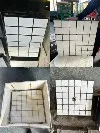
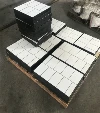
High manganese steel liner is often used in occasions with large impact loads, such as ball mill liner, due to its excellent work hardening performance. Medium manganese steel strikes a balance between cost and performance and is suitable for medium impact conditions. High chromium cast iron liner is widely used in ore crushing and grinding equipment due to its high hardness and wear resistance. Alloy steel liner can adapt to different working conditions by adjusting the proportion of elements such as carbon, chromium and molybdenum. Rubber and ceramic linings are favored in specific fields such as chemical and food processing because of their lightweight, corrosion resistance and low noise characteristics.
Classification by use
The use of the lining determines its shape, size and structural design. Ball mill lining is one of the most widely used types, usually with corrugated or convex ridge design to enhance the lifting effect of the grinding medium. Crusher linings need to withstand high impact loads, often made of high manganese steel or high chromium cast iron, and designed as toothed or curved structures to improve crushing efficiency.
In addition, linings are also widely used in industrial machinery such as conveying equipment, vibrating screens and flotation machines. Conveyor linings are mostly made of rubber or polyurethane materials to reduce direct friction between materials and metal surfaces; vibrating screen linings need to take into account wear resistance and screening efficiency, and often use composite materials or special alloys.
Development trend of linings
With the advancement of industrial technology, the performance requirements of linings are increasing. In the future, lightweight, high wear resistance and environmental protection will become important directions for the development of linings. For example, the application of ceramic composite materials and nano-coating technology is expected to further improve the wear resistance and service life of the liner. At the same time, customized design will also become a trend to meet the personalized needs of different industries for liner.
Understanding the classification and characteristics of liner will help enterprises choose the most suitable liner products according to actual working conditions, thereby improving production efficiency and reducing maintenance costs.