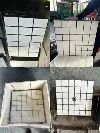
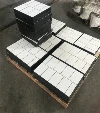
As a key wear-resistant component in industrial equipment, linings are widely used in mining, building materials, electricity and other fields. Their structural design and material selection directly affect the equipment life and production efficiency. In recent years, with the advancement of materials science and manufacturing technology, lining structures are undergoing significant innovations, bringing better solutions to global industrial customers.
Traditional linings are mostly made of high manganese steel or ordinary alloy steel, formed by integral casting or forging, and the structure is mainly flat or simple curved. Although this type of design has a low cost, it is prone to local damage under high impact and high wear conditions, resulting in frequent replacement. To address this pain point, the new generation of linings began to adopt a modular combination structure, splitting a single lining into multiple functional units, and achieving rapid disassembly and assembly through mortise and tenon or bolt connections. This design not only reduces maintenance costs, but also allows the selection of differentiated materials for different wear areas, such as high-toughness steel in the impact zone and high-chromium cast iron in the abrasion zone, which significantly improves the overall performance.
In the field of materials, the application of composite linings is gradually expanding. By embedding ceramic particles or cemented carbide into a metal matrix to form a gradient composite structure, the surface hardness of the liner can reach HRC60 or above, while maintaining good impact resistance of the matrix. Some high-end products also introduce nano-coating technology to form a micron-level protective layer on the working surface of the liner to further reduce material friction loss.
Structural optimization is also reflected in the design of details. The principle of bionics is introduced into the surface texture design of the liner, such as imitating the laminated structure of shells or the super-hydrophobic surface of lotus leaves, which can effectively disperse impact stress and reduce material adhesion. In addition, the elastic liner developed for vibration equipment can absorb part of the mechanical vibration energy through the internal preset buffer structure, reducing the damage caused by equipment resonance.
At present, global industrial upgrading is driving the liner technology towards customization and lightweight. With the application of 3D printing technology in mold manufacturing, complex internal cooling channels or stress dispersion structures can be realized, providing new solutions for high temperature and high pressure conditions. In the future, intelligent liner may be integrated with sensor networks to monitor wear status and issue warnings in real time, further promoting the transformation of industrial equipment to predictive maintenance.