


Ceramic-Lined Flanged Fitting
Ceramic-lined flanged fittings combine a steel fitting body with an internal alumina ceramic lining for abrasive material transfer. The steel body provides the connection structure, while the ceramic protects the internal flow path from particle abrasion. Flange dimensions, bore size, ceramic grade, lining thickness and fitting geometry are specified according to the pipeline drawing and service conditions.
Where Ceramic-Lined Flanged Fittings Are Used
Abrasive Powder Lines: Used in systems conveying fly ash, cement powder, mineral powder, pulverized materials and other abrasive solids.
Slurry Systems: Applied to selected slurry lines where suspended solids create concentrated wear around fittings and flow-direction changes.
Process Transfer Lines: Used at equipment connections, transfer sections and pipeline maintenance points in mining, cement, power generation, steel processing and bulk material handling.
Key Construction
Steel Fitting Body
The steel body provides the external geometry, mechanical support and flange connection. Carbon steel or a specified steel grade can be selected according to the operating conditions.
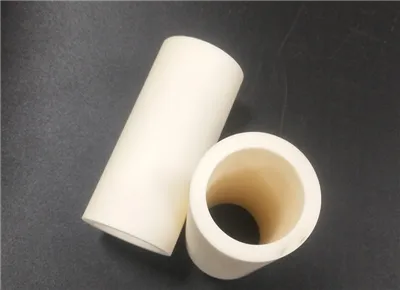
Alumina Ceramic Lining
The material-contact surface uses alumina ceramic with grades from 92% to 99% Al₂O₃. Grade selection is based on abrasion level, material characteristics and required ceramic properties.
Internal Lining Profile
Ceramic sections follow the internal profile of the fitting. Lining thickness and ceramic geometry are coordinated with the finished bore and flow direction.
Main Advantages
Wear Protection at Fittings
Ceramic places a hard wear surface directly in the material flow path, protecting areas around connections and flow transitions.
Defined Internal Bore
The ceramic lining is configured around the required internal passage. Bore dimensions can be controlled according to the pipeline design.
Steel-Ceramic Structure
The steel body provides structural and connection functions, while the alumina ceramic handles direct contact with abrasive material.
Technical Specifications
|
Parameter |
Standard Range / Option |
|
Alumina Content |
92%–99% Al₂O₃ |
|
Mohs Hardness |
9 |
|
Nominal Diameter |
50–800 mm |
|
Ceramic Lining Thickness |
3–50 mm |
|
Connection Type |
Flanged |
|
Flange Standard |
ANSI / DIN / GB / Specified Standard |
|
Outer Body |
Carbon Steel / Specified Steel |
|
Fitting Geometry |
According to Drawing |
|
Ceramic Water Absorption |
≤0.01% |
How to Select the Fitting
Match Pipe Diameter
Confirm nominal diameter and required internal bore. Ceramic thickness affects the final flow passage and should be included in the dimensional review.
Confirm Flange Details
Provide flange standard, nominal size, pressure class, bolt-hole pattern and facing dimensions for connection matching.
Review Material Flow
Particle size, material velocity, solids concentration and flow direction help identify the principal wear areas within the fitting.
Check Service Conditions
Operating temperature, pressure, conveyed material and conveying method should be reviewed before finalizing the lining configuration.
Customization Options
Dimensions
Overall length, bore diameter, flange dimensions and fitting geometry can follow project drawings.
Ceramic Configuration
Ceramic grade, lining thickness and ceramic arrangement can be selected according to the fitting profile and expected wear zone.
Connection Details
Flange drilling, facing, orientation and connection dimensions can be prepared to match the existing pipeline layout.
Quality Control Points
Ceramic Dimensions: Ceramic components are checked for dimensional consistency before assembly to maintain the specified internal profile.
Lining Alignment: The ceramic lining is inspected around the bore, transitions and flange connection area to maintain the required flow passage.
Finished Dimensions: Flange alignment, bolt-hole position, overall dimensions and finished bore are checked against the approved drawing.
Information Required for Quotation
Pipeline Data
Provide nominal diameter, fitting type, overall dimensions and connection arrangement.
Flange Data
Specify flange standard, pressure class, bolt-hole pattern, facing and connection orientation.
Service Data
Material conveyed, particle size, flow velocity, solids concentration, operating temperature and pressure provide the basis for lining selection.
Drawing
A dimensioned drawing or pipeline layout allows the fitting geometry, ceramic thickness, bore and flange interface to be reviewed before production.
FAQ
Q: What is a ceramic-lined flanged fitting?
A: It is a flanged pipe fitting with an internal alumina ceramic lining. The steel body provides the structural and connection functions, while the ceramic forms the internal wear surface.
Q: Which alumina grades can be used?
A: Alumina grades from 92% to 99% are available. Selection depends on the conveyed material, abrasion conditions and required ceramic properties.
Q: Can the flange match an existing pipeline?
A: Yes. Flange standard, nominal size, pressure class, bolt-hole pattern, facing and orientation can be specified from the pipeline requirements or drawing.
Q: How is the ceramic lining thickness selected?
A: Selection considers pipe diameter, particle size, material velocity, solids concentration, flow direction and expected wear location.
Q: Can the fitting follow a custom drawing?
A: Yes. Fitting geometry, bore, flange dimensions, ceramic grade and lining thickness can be specified according to an approved technical drawing.
Q: What information should be included in an inquiry?
A: Nominal diameter, flange standard, pressure class, fitting dimensions, conveyed material, particle size, temperature, pressure and flow conditions provide the basic technical information for review.
Hot Tags: ceramic-lined flanged fitting, China ceramic-lined flanged fitting manufacturers, suppliers, factory, ceramic liner
Previous
Ceramic-Lined Reducing ElbowYou Might Also Like




Send Inquiry