


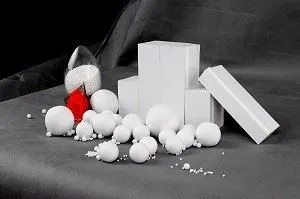
Ball Mill Liner
A ball mill liner is a wear-resistant lining installed inside a ball mill to protect the steel shell from the grinding action of the grinding media and the material being processed. These liners are typically made from high-density alumina ceramic bricks and are used wherever fine grinding is required - mining, mineral processing, cement production, ceramic manufacturing, and power generation.
The core advantage of a ceramic ball mill liner is longevity. A steel or rubber liner in a ball mill may last 6–18 months, depending on the application. A high-alumina ceramic liner, properly installed, can run for 3–5 years or longer. That difference translates directly to fewer shutdowns for relining, lower maintenance labor, and more predictable production schedules.
What problem does it solve? In a ball mill, the lining takes constant pounding from steel or ceramic grinding media. Over time, standard liners develop uneven wear patterns, crack, or loosen. Once the liner fails, the steel shell is exposed - and repairing a worn shell costs far more than replacing the liner. A ceramic liner with interlocking design and low wear loss eliminates these failure modes, keeping the mill running until the scheduled relining.
For a wholesale buyer, this means supplying a solution that customers in mining, cement, and ceramics industries genuinely need - and repeat orders from operations that have seen the difference.
Core Characteristics
Five factors determine how long a ball mill lining lasts.
Wear rate. This is the most important metric. A brick that wears slowly will stay in service longer. Tecera's TL92S grade loses only 0.005% of its mass in 24 hours under standard test conditions - roughly half the wear loss of standard 92% alumina bricks. Half the wear rate means approximately double the service life.
Interlock design. The trapezoid brick design is wider at one end and narrower at the other. When laid side by side, the wide end of one brick wedges against the narrow end of the next. This mechanical interlock keeps the lining intact even if the epoxy adhesive eventually ages. In a ball mill, the lining experiences constant vibration and impact from grinding media - conditions that fatigue epoxy over time. The mechanical interlock provides a backup retention system that ordinary rectangular bricks lack.
Density. Higher density means lower porosity, which means less liquid absorption and greater resistance to chemical attack from slurries. Tecera's TL95 and TL97 grades achieve bulk density above 3.68 g/cm³ and water absorption below 0.01%. This near-zero porosity also prevents freeze-thaw damage in mills located in cold climates.
Purity. Higher Al₂O₃ content gives harder, more wear-resistant bricks. For most mineral grinding, 92% is sufficient. For ceramic glaze grinding where contamination would affect color, 95% or 97% alumina is recommended. For lithium battery material production where even trace iron contamination is unacceptable, 99% grade is available.
Shape range. A complete mill lining needs more than just trapezoid bricks. It also requires rectangular bricks for straight sections, half-bricks for the manhole area, flake bricks for tight curves, and special shapes for the inlet and outlet cones. Tecera supplies all of them, so a customer can buy a complete kit from one source.
Product Advantages
Longer service life through lower wear loss. The TL92S grade has a self-wearing loss of only 0.005% over 24 hours - roughly half the wear loss of standard 92% alumina bricks. This lower wear rate comes from a denser microstructure achieved through precise particle size control and a modified sintering cycle. In a ball mill processing hard ore, a standard alumina brick may lose 2–3 mm of thickness in the first year. A TL92S brick loses half that. For a mine that previously relined its mill every 18 months, switching to lower-wear bricks can extend the relining interval to 30–36 months. Each avoided relining saves days of downtime, tens of thousands in labor, and the material cost of the lining itself. For the wholesale buyer, this performance gap is a clear upselling point for the premium grade.
Mechanical interlock prevents loose bricks. Most mill linings use rectangular bricks held by epoxy alone. In a ball mill, the lining experiences constant vibration from the rotating shell and impact from falling grinding media. Epoxy can fatigue over time. Once one brick loosens, adjacent bricks lose support and follow. The trapezoid design - wider at one end, narrower at the other - creates a mechanical wedge. The wide end of one brick locks against the narrow end of the next. Even if the epoxy ages, the bricks cannot shift sideways or lift out because they are physically trapped. For a plant that has experienced loose bricks jamming discharge grates or damaging downstream pumps, this mechanical retention is the difference between predictable scheduled relining and emergency mid-campaign repairs.
Zero liquid penetration eliminates freeze-thaw and chemical damage. With water absorption below 0.01%, the brick is effectively non-porous. No slurry liquid can seep into the ceramic. In a coal prep plant where process water is acidic, a porous brick would absorb that acid and weaken from the inside. In a mill located in a cold climate, absorbed moisture would freeze and crack the brick. Dense alumina bricks eliminate both failure modes. A mill in northern China using Tecera bricks has operated for five winters with no freeze-related cracking. For the wholesale buyer, that means a product that performs reliably regardless of climate.
High-purity grades prevent product contamination. For ceramic body and glaze grinding, even trace iron contamination can discolor the final product. A white glaze that turns grey or brown from iron pickup is a reject. TL95 and TL97 grades use imported alumina powder with Fe₂O₃ below 0.05% and Na₂O below 0.03%. The bricks themselves are inert and do not leach metals into the material being ground. For a ceramic tile manufacturer or a lithium battery material producer, this purity is non-negotiable. These customers have no alternative but to use high-purity ceramic linings - and they will pay accordingly.
Lower maintenance cost from fewer shutdowns. The combination of low wear loss, mechanical interlock, and chemical stability means the lining lasts its full design life without mid-campaign failures. A cement mill in Brazil using Tecera TL92S bricks extended its relining interval from 18 months to over 42 months. For a plant running a 1,000 kW ball mill 8,000 hours per year, each relining shutdown costs days of lost production, labor, and material. Reducing the number of relinings from three per five years to one per five years cuts total relining cost by two-thirds. For the wholesale buyer, this is the most compelling value proposition: a product that costs more upfront but costs less over the life of the mill.
Ordering and Support
Tecera supplies ball mill liners in all TL grades (92, 92S, 95, 97), with a full range of shapes including rectangle, trapezoid, half-brick, flake, and custom inlet/outlet bricks. Bulk pricing is available for wholesale buyers. Free samples are available for destructive testing.
To request a quote, provide the mill diameter and length, required brick shapes and thicknesses, material to be ground, and estimated annual volume. For complete mill lining kits, a mill drawing is helpful.
Lead time for standard brick sizes is 2–3 weeks. Custom shapes require 4–6 weeks. Global shipping with export-grade packaging is provided. Response time for quote requests is typically two business days.
Hot Tags: ball mill liner, China ball mill liner manufacturers, suppliers, factory, ceramic liner
You Might Also Like



Send Inquiry