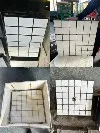
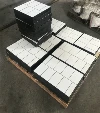
In modern industrial production, equipment wear has always been a key factor affecting efficiency and cost. With the advancement of materials science, composite linings have become the preferred solution in the fields of mining, metallurgy, electricity, etc. with their excellent wear resistance, impact resistance and economy. This innovative product that combines the advantages of multiple materials is redefining the value standard of industrial wear-resistant parts.
The core value of composite linings lies in their "composite" characteristics. By combining high-hardness materials (such as ceramics and alloys) with tough matrices (such as rubber and polymers), it not only has the high strength of traditional metal linings, but also overcomes the defects of easy breakage and high noise. For example, in mining crushing equipment, composite linings can reduce the wear rate by more than 30%, while reducing equipment vibration noise, significantly improving the safety and comfort of the working environment.
From an economic perspective, the life cycle cost advantage of composite linings is particularly prominent. Although the initial purchase cost may be slightly higher than that of ordinary linings, its ultra-long service life and low maintenance requirements can help companies save more than 50% of replacement and downtime costs. A case study of a large port conveyor belt renovation showed that after using composite linings, annual maintenance costs dropped by 40%, equipment failure rate dropped by 65%, and the investment payback period was shortened to 1.5 years.
Environmental protection and sustainable development are also important value dimensions of composite linings. Its lightweight design can reduce equipment energy consumption, and the use of some recyclable materials is in line with the trend of circular economy. In the power industry, the application of composite linings reduces coal mill energy consumption by about 7% and reduces the generation of hundreds of tons of metal waste each year.
At present, global industrial upgrading is driving the continued growth in demand for wear-resistant materials. With its technological integration and scene adaptability, composite linings have moved from niche areas to the mainstream market. In the future, with the penetration of 3D printing customization technology and nano-coating technology, this product is expected to further expand its application boundaries and create a more efficient and sustainable value chain for industrial enterprises.