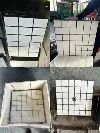
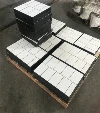
In recent years, composite linings have seen a significant increase in demand in the global industrial field due to their excellent wear resistance, impact resistance and economy. This new type of protective plate, which is a composite of high-hardness materials and tough matrix, is gradually replacing traditional metal linings and becoming the preferred solution for industries such as mining, power, and building materials.
In the mining field, composite linings have become key components of crushers and conveying equipment. Taking gold and iron mines as examples, the equipment has long been facing the continuous impact of high-hardness ores. The average service life of ordinary steel liners is less than 3 months, while the composite linings are protected by surface ceramic layers or high-chromium cast iron layers. The service life can be extended to more than 1.5 years. After a Southeast Asian copper mine adopted composite linings, the annual replacement frequency was reduced by 60%, significantly reducing downtime maintenance costs.
The application of composite linings in the power industry has also shown explosive growth. Coal mills, pulverized dust fans and other equipment in coal-fired power plants have been eroded by coal dust particles for a long time, and traditional steel liners are prone to pitting and deformation. The gradient hardness design of the composite lining can effectively disperse the impact force. The measured data of a European power plant showed that the wear rate of its coal mill cylinder decreased by 75%, and the annual maintenance cost was saved by more than 200,000 euros.
The demand of the building materials industry is concentrated in the cement production line. High-temperature equipment such as rotary kilns and grate coolers have higher requirements for the thermal shock resistance of linings. The newly developed nano-composite lining can maintain structural stability at 800°C, and with modular design, the installation efficiency is increased by 40%. After an African cement group adopted this technology, the continuous operation cycle of the equipment was extended from 7 days to 21 days.
With the breakthrough of material technology, the application boundary of composite lining is expanding. New scenarios such as anti-corrosion lining of offshore wind power towers and anti-sticking lining of waste incinerators are constantly emerging. Industry analysts pointed out that the global composite lining market size is expected to maintain an average annual growth rate of 8% in the next three years. Its lightweight and long life characteristics perfectly meet the core demands of cost reduction and efficiency improvement in the industrial field. In the future, with the maturity of recycling and reuse technology, composite lining is expected to play a greater role in the field of sustainable development.