


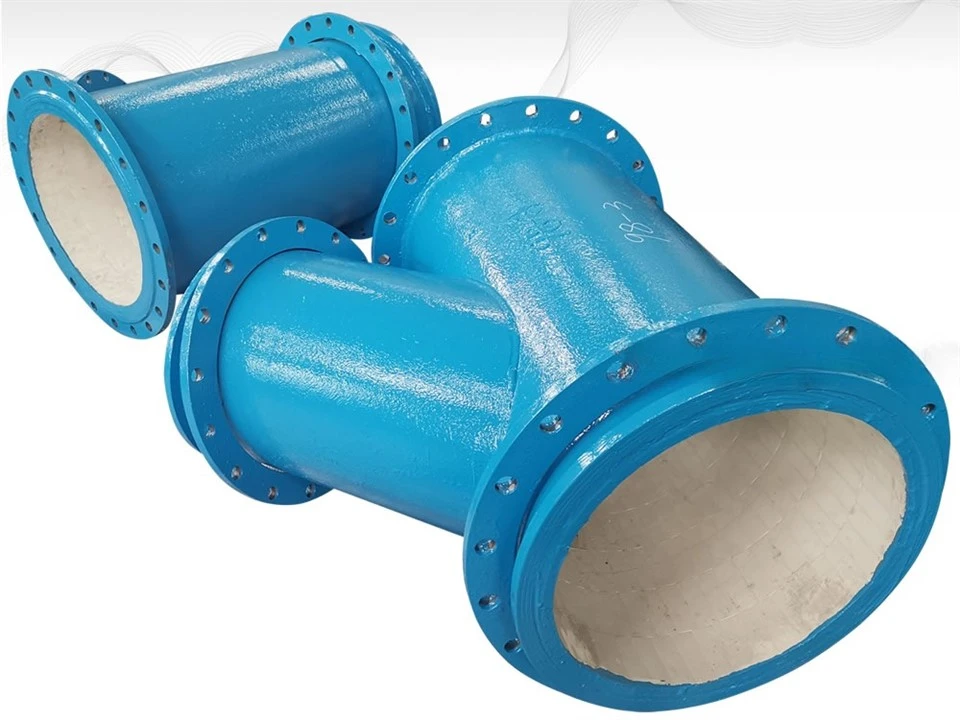


Wear-Resistant Ceramic Tee
Wear-Resistant Ceramic Tee
Tecera's wear‑resistant ceramic tee is a standard steel tee – carbon or stainless – but with a liner of high‑purity alumina ceramic bonded to the inside. The ceramic takes the punishment. The steel holds the pressure. It's not a new idea, but the execution matters. We've been making these for power plants, mines, and cement mills long enough to know where the weak points are.
Where you actually use it
Fly ash lines in coal‑fired power plants. Pulverized coal conveying. Cement raw meal and clinker transport. Ore slurry pipelines – copper, gold, iron ore. Tailings lines. Dust collection systems in steel mills. Anywhere that abrasive material moves through a pipe and changes direction at a tee.
In those places, a plain steel tee might last six months. Maybe a year if the velocity is low. A ceramic lined tee? We've seen them go five, eight, even ten years in fly ash service. That's not a promise – every plant is different – but it's what our customers tell us.
What you should look for
Not all ceramic tees are the same. A few things separate the ones that last from the ones that don't.
First, the ceramic grade. We use 92% or 95% alumina. Both are Mohs 9 – hard enough to resist quartz, sand, ash, and most ores. The 95% grade is slightly denser and a bit more wear‑resistant. For most jobs, 92% is fine. For really tough stuff – cement clinker, quartz‑rich ore – the 95% grade pays off.
Second, how the ceramic is installed inside the tee. The tricky part is the branch junction, where the flow splits. If there's a gap in the ceramic lining there, the steel gets hit directly. That gap will wear through fast. We cut custom tiles for the branch intersection so the ceramic covers everything – no exposed steel.
Third, the adhesive. The ceramic tiles are bonded to the steel with a high‑temperature epoxy that stays stable up to about 200°C. Some suppliers use cheaper adhesives that soften at 100–120°C. In a cement plant's clinker line, temperatures can hit 150°C. Soft adhesive lets tiles shift. Shifting tiles create gaps. Gaps kill the tee.
How we make them
The outer shell is carbon steel – Q235 or 20# seamless, usually – or stainless if the client needs corrosion protection. The inner lining is alumina ceramic. We press the ceramic tiles from powder, sinter them, then cut them to fit the tee's internal shape. The tiles are arranged with staggered seams – not lined up in a straight row – so abrasive particles can't carve a continuous groove.
The bonding is done with a two‑part epoxy. It's applied to both the steel and the ceramic, then the tiles are pressed into place. The tee sits overnight to cure. After that, each tee is pressure‑tested and inspected. We reject any tee with a loose tile or a visible gap.
One thing we do that many competitors don't: we custom‑cut tiles for the branch junction. That's the spot where most ceramic tees fail first. By covering it completely, we add years to the service life.
Technical Specifications
| Parameter | 92% Alumina Grade | 95% Alumina Grade |
|---|---|---|
| Al₂O₃ content (%) | ≥92 | ≥95 |
| Bulk density (g/cm³) | ≥3.63 | ≥3.68 |
| Water absorption (%) | ≤0.01 | ≤0.01 |
| Mohs hardness | 9 | 9 |
| Vickers hardness (HV) | 1000–1100 | 1150–1250 |
| Fracture toughness (MPa·m¹/²) | 3.5–4.0 | 3.5–4.0 |
| Max service temperature (adhesive‑bonded, °C) | 200 | 200 |
| Connection types | Flanged (ASME B16.5, GB/T9113) / Welding | |
| Size range | DN50 – DN300 (NPS 2" – 12") | |
| Pressure rating | 1.0 MPa (Class 150) - higher available |
Tee types available:
Straight tee / equal tee - all three openings same diameter
Reducing tee - branch smaller than main line
Oblique tee / angled tee - branch at custom angle (not 90°)
Y‑type tee - smoother flow transition
Custom sizes, angles, and flange standards are available on request.
Keywords: ceramic lined steel pipe, ceramic fabricated pipe, ceramic lined elbow
Why this tee saves money in the long run
The ceramic lining is hard – much harder than steel. When abrasive particles hit it, they don't cut into it. They bounce off or slide along. That's the basic physics. Steel gets micro‑cut with every particle; ceramic doesn't.
So a steel tee in fly ash service might last six months before the wall thins enough to leak. A ceramic tee in the same line can run five years or more. That's not marketing – we have power plant customers who have been using our tees for over a decade, still on the first set.
The cost difference isn't huge. A ceramic tee costs more upfront than a steel tee. But when you factor in the replacement labor, the downtime, and the risk of a spill, the ceramic tee pays for itself after the first year. Every year after that is pure savings.
The adhesive matters too. Ours is rated for 200°C. That covers most industrial conveying systems. If the process runs hotter – up to 800°C – we have a different bonding method (SHS casting). But for normal temperature ranges, the epoxy works fine. It doesn't soften, so the tiles don't shift.
And because the ceramic has almost no porosity – water absorption below 0.01% – it doesn't soak up slurry or process liquids. That matters in cold climates. If a porous ceramic absorbs water and then freezes, it cracks. We've seen that happen with cheaper tiles. Ours doesn't absorb anything, so no freeze cracking.
Where people are using them
Power plants: fly ash handling, coal powder conveying, bottom ash, FGD slurry lines. A coal‑fired plant in Ohio put our tees in their ash lines ten years ago. They're still there.
Cement plants: raw meal, clinker, cement dust. A cement mill in Brazil was replacing steel tees every eight months. They switched to our 95% alumina tees. The first set lasted four years.
Mining: ore slurry, tailings, concentrate. A copper mine in Chile had a problem with tees wearing through in weeks – the slurry was high‑velocity quartz. Our ceramic tees now run 18–24 months.
Steel mills: pulverized coal injection, dust collection, slag lines. High temperature plus abrasive dust. The ceramic handles both.
Chemical plants: catalyst conveying, corrosive slurries. The alumina is inert, so no contamination.
How to get a quote
If you're a wholesale buyer, send us the following: pipe diameter and tee type (straight, reducing, oblique), the material being conveyed (fly ash, ore slurry, cement, etc.), temperature and pressure, and an estimate of annual volume. If you have a drawing, even better – we can quote exactly.
We offer bulk pricing, global shipping, and free samples for destructive testing. Response time is usually within 48 hours.
Hot Tags: wear-resistant ceramic tee, China wear-resistant ceramic tee manufacturers, suppliers, factory, ceramic liner
You Might Also Like


Send Inquiry