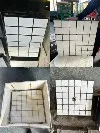
As a key material in the field of high-temperature industry, the design principle of refractory ceramics is directly related to the safety, service life and energy efficiency of equipment. With the rapid development of industries such as steel, glass, and chemicals, the design technology of refractory ceramics is also constantly innovating to meet the needs of more stringent use environments.
The design of refractory ceramics is first based on the basic theory of materials science. Its core components usually include high-melting point compounds such as alumina, silicates, and silicon carbide, which can maintain stable physical and chemical properties at high temperatures. When designing, key indicators such as thermal expansion coefficient, thermal shock resistance, and load softening temperature should be considered to ensure that the material is not easy to crack or deform under extreme temperature changes. For example, by adjusting the crystal phase composition and microstructure, the thermal shock resistance of the material can be significantly improved, thereby extending the service life.
In terms of structural design, refractory ceramics need to adapt to the working conditions of different industrial equipment. For example, in the metallurgical industry, refractory materials need to withstand the erosion and mechanical impact of molten metals; while in glass kilns, they need to resist the corrosion of high-temperature molten glass. Therefore, composite layer structures or gradient functional materials are used in the design to achieve an overall protective effect by optimizing the performance of different areas. In addition, surface treatment technologies such as coating or impregnation processes are also widely used to enhance the corrosion resistance and wear resistance of materials.
In recent years, the application of digital design tools has further promoted the development of refractory ceramics. Through computer simulation technology, engineers can accurately predict the behavior of materials in high temperature environments and optimize the design scheme. This not only improves the reliability of products, but also reduces R&D costs and time.
In the future, as the demand for green manufacturing and energy conservation and emission reduction grows, the design of refractory ceramics will pay more attention to lightweight, energy-saving and environmental protection. Through innovative materials and structural design, refractory ceramics will continue to provide solid guarantees for the efficient operation of high-temperature industries.