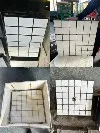
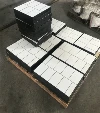
In recent years, with the increasing demand for wear resistance and corrosion resistance of industrial equipment, lined ceramic products have been widely used in chemical, energy, mining and other fields due to their high hardness, high temperature resistance and strong chemical stability. For foreign trade enterprises, mastering the production skills of lined ceramic products can not only improve product quality, but also enhance competitiveness in the international market. This article will analyze the core production technology of lined ceramic products from three key links: material selection, molding process and surface treatment.
Material selection is the basis of the quality of lined ceramic products. Commonly used ceramic materials include alumina, silicon carbide and silicon nitride. Alumina ceramics are suitable for medium and low strength working conditions due to their low cost and excellent wear resistance; while silicon carbide ceramics are the first choice for high temperature and high pressure environments due to their higher hardness and high temperature resistance. Foreign trade enterprises need to combine the specific needs of customers when selecting materials. For example, the chemical industry may pay more attention to corrosion resistance, while mining equipment focuses on impact resistance.
The molding process directly affects the dimensional accuracy and structural strength of the product. The current mainstream molding methods include dry pressing, isostatic pressing and grouting. Dry pressing is highly efficient and suitable for simple-shaped parts; isostatic pressing can achieve high-density pressing of complex structures, but the cost is relatively high. Foreign trade companies need to choose the process according to the order requirements. For example, high-end equipment exported to Europe often requires isostatic pressing to ensure zero defects.
Surface treatment is a key step in improving the performance of lined ceramic products. Common processing technologies include high-temperature sintering and coating strengthening. High-temperature sintering can eliminate internal stress and increase density; while nano-coating technology can further enhance wear resistance and thermal shock resistance. It is worth noting that the environmental protection standards of different countries vary greatly. For example, the EU has strict restrictions on heavy metal content, and companies need to adjust the process in advance to meet export requirements.
After mastering these production techniques, foreign trade companies also need to pay attention to international certification and logistics packaging. By optimizing the production process and strict quality control, lined ceramic products can not only meet the diverse market needs, but also lay the foundation for companies to open up a broader overseas market.