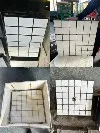
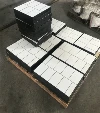
In today's global industrial and consumer goods market, lined ceramic products have become an important material choice in the fields of chemical, energy, and medical due to their excellent high temperature resistance, corrosion resistance, and wear resistance. However, with the diversification of market demand and technological progress, the design concept of lined ceramic products is undergoing a profound change, from single functionality to a combination of aesthetics, sustainability, and intelligence.
The design of traditional lined ceramic products often focuses on functionality, such as core properties such as high temperature resistance and corrosion resistance. However, modern design concepts pay more attention to user experience and the full life cycle value of products. Designers have begun to incorporate ergonomics and aesthetic elements into product structures, so that lined ceramic products can not only meet industrial needs, but also improve operational convenience and visual beauty. For example, in the medical field, the surface treatment process of lined ceramic parts is more refined to reduce irritation to patients; in the high-end kitchenware market, the design of ceramic linings emphasizes coordination with the overall kitchenware style.
Sustainable development has become a core issue in the global manufacturing industry, and the design of lined ceramic products is no exception. By optimizing material ratios and production processes, modern ceramic lining products can reduce energy consumption and waste generation. For example, the use of recycled ceramic raw materials or low-energy sintering technology can reduce production costs and carbon emissions. In addition, the introduction of modular design concepts makes ceramic lining components easier to repair and replace, thereby extending the product life and reducing resource waste.
The trend of intelligence has also brought new possibilities to the design of lined ceramic products. By integrating sensors or nano-coating technology, ceramic linings can achieve real-time monitoring functions, such as temperature, pressure or chemical corrosion detection, thereby improving the safety and efficiency of equipment operation. This "smart ceramic" concept is gradually being implemented in fields such as energy, aerospace, etc., bringing revolutionary changes to the industry.
In the future, the design of lined ceramic products will continue to find a balance between traditional craftsmanship and modern technology to meet the global market's demand for high-performance, environmentally friendly and intelligent products. This trend not only promotes the advancement of materials science, but also provides broad space for cross-industry cooperation.