


Zirconium Silicate Beads
We are always at your service when you need
A grinding job does not always require the most expensive media. For ceramic glazes, industrial coatings, paints, calcium carbonate, kaolin, and many pigments, the priority is not extreme grinding efficiency but consistent, cost‑effective performance. Specifying high‑density zirconia beads where they are not needed only raises production costs without improving product quality.
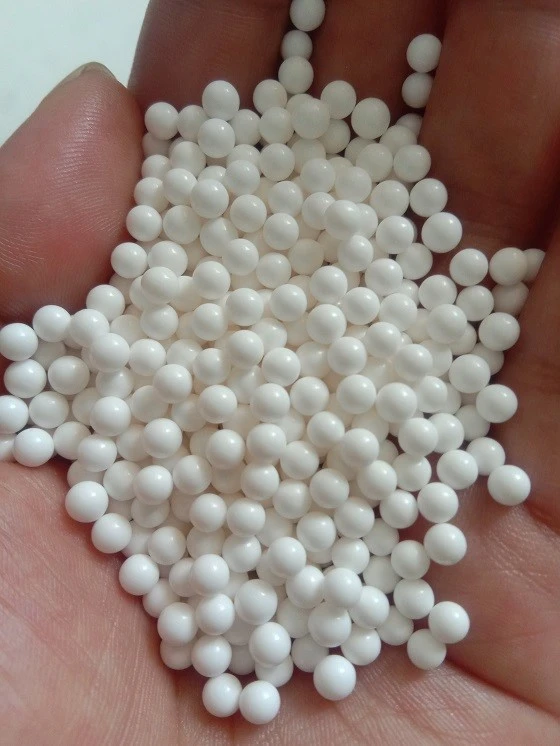
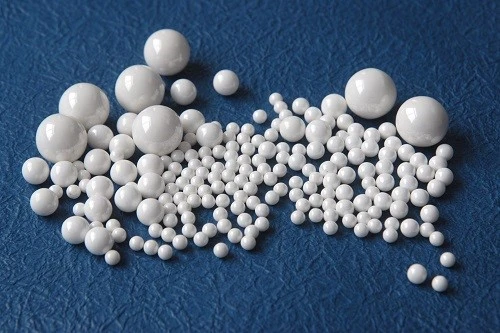
Zirconium silicate beads (often called "65 zirconia beads") fill that gap. With zirconium content of 54–65%, they offer good hardness (Mohs 7–8), medium density (around 4.0 g/cm³), and a significantly lower price than high‑zirconia beads (95% ZrO₂). They work well in medium‑speed mills, low‑to‑medium viscosity slurries, and applications where metal contamination or equipment wear is not the primary concern.
The real value is simple: reliable grinding performance at a lower cost. When your customer matches the bead to the actual process instead of over‑specifying, they reduce operating expenses without sacrificing quality. For a wholesale buyer, that means offering a smart, economical alternative to high‑end zirconia beads – and winning customers who are price‑sensitive but still demand consistent results.
active members
years experience
events & challenges
expert instructors
What to look for in zirconium silicate beads
Four properties determine whether these beads are right for your customer's application.
Good hardness
Mohs 7–8, Vickers >900 HV. High‑zirconia beads reach Mohs 9, but zirconium silicate beads handle most pigments, glaze materials, calcium carbonate and kaolin well. They do not break down easily, even in continuous production.
Balanced density
True density ~4.0–4.2 g/cm³, bulk density ~2.4–2.5 kg/L. Lower than zirconia (~6.0) but higher than alumina or glass. This provides adequate grinding energy without overloading the mill motor or causing excessive slurry heating. .
Low wear rate
Self‑wearing loss ≤0.01%, and wear rates as low as <0.05 kg per ton of processed slurry. That is significantly better than glass or alumina beads, reducing downtime for top‑ups and contamination from bead fragments.
Chemically stable
Zirconium silicate is inert and resists acids and alkalis. This matters for ink and pigment grinding, where metal contamination would affect color or performance. The beads do not react with most process materials.
Our company has been present for over 25 years in Zirconium silicate beads
Zirconium silicate beads are manufactured from high‑purity zirconium silicate powder (ZrSiO₄) through a precise process of proportioning, wet milling, spray drying, forming, high‑temperature sintering, and strict screening. The resulting beads combine good hardness, medium density, low wear rate, and high sphericity, making them a cost‑effective choice for grinding ceramic glazes, paints, inks, calcium carbonate, and other medium‑hard materials. Quality is controlled at every stage to ensure batch‑to‑batch consistency.
How they are made
Manufacturing process
Quality control
Our Competitive Edge

How they are made
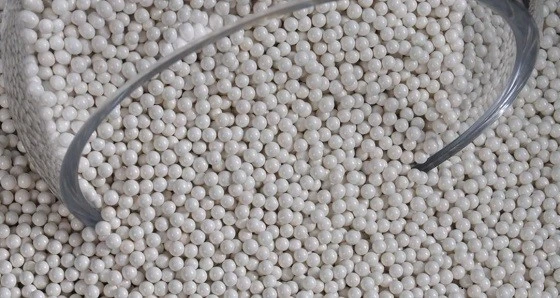
Typical composition: ZrO₂ 54–65%, SiO₂ 30–37%, plus small amounts of Al₂O₃ – hence the common name "65 zirconia beads." Color is off‑white or yellowish‑white. The beads have a dense, pore‑free crystal structure achieved through high‑temperature sintering, which gives high compressive strength (>1000 N for 2 mm beads) and low wear rate. Sphericity is ≥96%, improving slurry circulation and grinding uniformity.
Manufacturing process
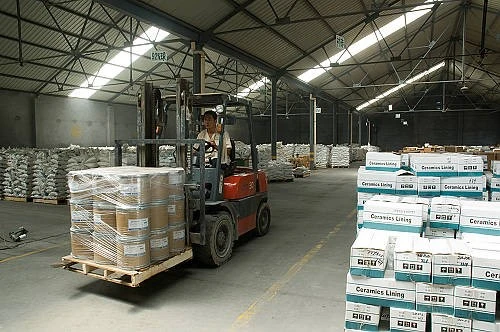
High‑purity zirconium silicate powder is precisely proportioned, wet‑milled for uniform particle size, and spray‑dried. The dried powder is formed into beads using advanced rolling or isostatic pressing, then sintered in computer‑controlled kilns for full densification. After sintering, beads are screened and sorted to ensure size distribution within ±0.1 mm; out‑of‑round or off‑size beads are rejected.
Quality control
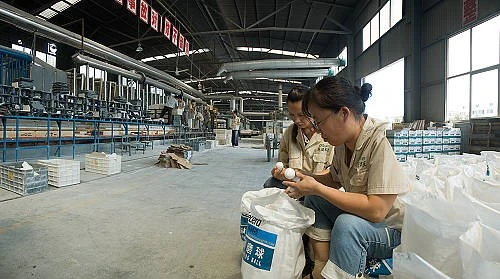
Each batch is tested for ZrO₂ and SiO₂ content by XRF, density by pycnometer, crush strength by compression tester, Vickers hardness per ASTM C1327, and sphericity by optical sorting. This rigorous regime ensures consistent performance across production runs.
Our Competitive Edge
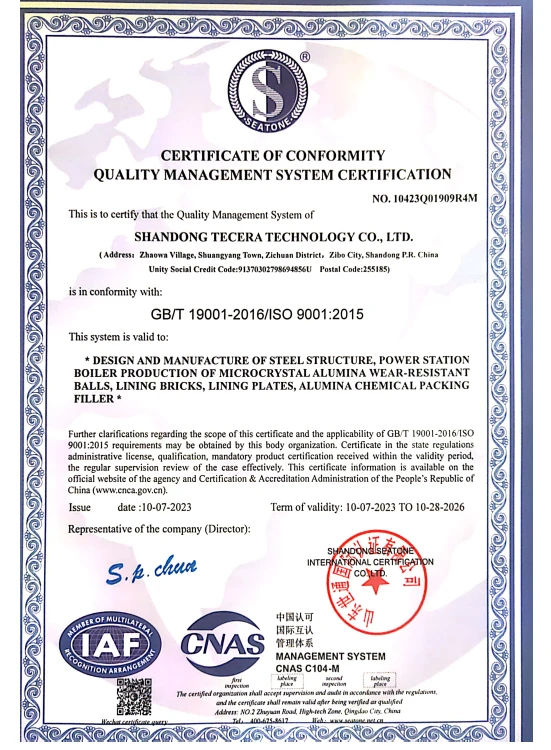
Many suppliers deliver inconsistent quality batch to batch. Tecera uses precise sintering control and strict sorting to keep bead size variation within ±0.1 mm. Polished bead surfaces also reduce equipment wear by up to 30%, lowering maintenance costs for end‑users. Consistent bead size translates directly to stable grinding results – and fewer customer complaints.
Application Scenarios
Ceramic glazes and frits
Zirconium silicate beads are widely used for grinding ceramic glazes. A tile manufacturer in Guangdong switched to Tecera's beads in their continuous ball mills, achieving stable viscosity and particle size while cutting grinding media costs by 30% compared with zirconia beads.
paints and coatings
The beads provide efficient dispersion of pigments and extenders without contaminating the formulation. For an industrial paint producer in Shanghai, switching from glass beads to zirconium silicate beads reduced mill downtime for bead replacement by 50%.

inks (gravure screen digital)
Fine grinding and dispersion of pigments, dyes, and additives require media that will not introduce contaminants that affect color accuracy. Zirconium silicate beads are recognized as effective media for the printing ink industry.
glass manufacturing
Efficient pulverizing and dispersing of glass raw materials, including silica, soda ash, and feldspar, to ensure uniform composition and quality. The beads improve raw material uniformity, reduce equipment wear, and meet strict quality standards.

titanium dioxide dispersion
TiO₂ is an abrasive white pigment. Zirconium silicate beads enable high dispersions for paints, plastics, and paper coatings.
agrochemicals
For grinding and dispersing wettable powders, suspensions, and other pesticide formulations. The beads do not react with active ingredients and resist corrosion. A crop science company in Jiangsu uses Tecera beads for wettable powder production, reporting 20% reduction in grinding time.
mineral processing
Suitable for grinding industrial minerals such as zircon sand and calcium carbonate where high density is not required.
metal surface treatment
Zirconium silicate beads are also effective for cleaning, polishing, and surface finishing of metals, including aviation parts, medical devices, and automotive components.
Hot Tags: zirconium silicate beads, China zirconium silicate beads manufacturers, suppliers, factory, zirconium grinding beads, zirconia silica beads, zirconium dispersion beads, zirconium beads, zirconium silicate beads, zirconium oxide ceramic beads
Previous
No InformationNext
No InformationYou Might Also Like


Send Inquiry