

As a supplier of ceramic tile liners, I have witnessed firsthand the remarkable capabilities and advantages these products bring to various industries. In this blog, we'll explore the strength of a ceramic tile liner and why it's a top - choice for many applications.
Material - Based Strength
Ceramic tile liners are crafted from high - quality ceramic materials. The most common ones used in our Ceramic Tile Liner products are alumina, zirconia toughened alumina (ZTA), and silicon carbide.
Alumina ceramic is known for its high hardness. Alumina has a Mohs hardness of around 9, which is second only to diamond on the Mohs scale. This high hardness makes it extremely resistant to abrasion. In industrial settings where there is a lot of particle flow, such as in mining and cement production, alumina ceramic tile liners can endure the constant scraping and scratching from the abrasive materials. For example, in a coal - handling plant, coal particles constantly flow through chutes and pipes. Alumina ceramic tile liners can protect these structures from the abrasive action of coal, ensuring a longer service life for the equipment.
ZTA ceramic, as represented by our ZTA Ceramic Wear Tiles, takes the strength of alumina a step further. By incorporating zirconia into the alumina matrix, ZTA ceramic gains enhanced toughness. The zirconia particles can absorb and deflect cracks that form during the wear process. This property is especially important in applications where the ceramic liner may experience impact loads in addition to abrasion. In a gravel - processing plant, for instance, the gravel may fall from a certain height onto the liner. The ZTA ceramic tile liner can resist the impact and continue to provide reliable abrasion protection.
Silicon carbide ceramic, on the other hand, offers excellent thermal conductivity and chemical resistance in addition to high hardness. In high - temperature and chemically aggressive environments, such as in some chemical processing plants or foundries, silicon carbide ceramic tile liners can maintain their integrity and performance.
Structural Strength
The way ceramic tile liners are designed and installed also contributes to their strength. Our Engineered Ceramic Lining Systems are engineered to fit the specific needs of different applications.
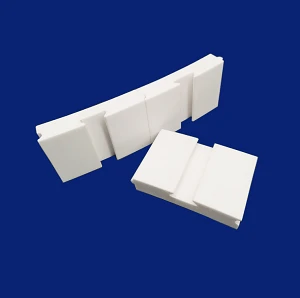

One of the key structural features is the interlocking design of ceramic tiles. In most of our ceramic tile liner products, the tiles are designed with an interlocking mechanism. This means that the tiles are connected to each other in a way that distributes the load evenly across the entire liner surface. For example, in a large - scale conveyor belt system, when the conveyor is transporting heavy - duty materials, the interlocking ceramic tiles can better withstand the weight and movement of the materials. Instead of having individual tiles bear the brunt of the load, the load is spread out, reducing the risk of tile breakage.
Another aspect of structural strength is the way the ceramic tile liner is attached to the base structure. We use advanced bonding techniques and fasteners to ensure a secure connection between the liner and the substrate. In a steel pipe lined with ceramic tiles, for example, we may use a high - strength adhesive or mechanical fasteners to hold the tiles in place. This strong attachment not only prevents the tiles from falling off but also allows the liner and the base structure to work together as a unified system, enhancing the overall strength and durability of the lined equipment.
Chemical and Corrosion Resistance
Ceramic tile liners offer excellent resistance to a wide range of chemicals. In chemical processing plants, where various acids, alkalis, and solvents are used, ceramic tile liners can protect the equipment from corrosion. For instance, in a sulfuric - acid production facility, the pipes and storage tanks can be lined with ceramic tile liners. The ceramic material is inert to sulfuric acid and other corrosive substances, so it can prevent the acid from eating away at the metal or concrete structures.
In addition to chemical corrosion, ceramic tile liners are also resistant to oxidation. Oxidation can occur in high - temperature environments, such as in furnaces or incinerators. Our Ceramic Wear Liners can withstand the oxidative effects of high - temperature gases, maintaining their physical and mechanical properties over time.
Thermal Strength
Ceramic tile liners have good thermal stability. They can withstand high - temperature fluctuations without significant damage. In a glass - manufacturing plant, for example, the melting furnaces operate at extremely high temperatures. The ceramic tile liners used in the furnace lining can endure the high - heat environment and the rapid temperature changes that occur during the start - up and shut - down processes of the furnace.
The low thermal expansion coefficient of ceramic materials is also an important factor in their thermal strength. When a material is heated, it expands. If the expansion is too large, it can cause internal stresses and lead to cracking. Ceramic tile liners have a relatively low thermal expansion coefficient, which means they expand less when heated compared to many other materials. This characteristic ensures that the liner remains intact even under high - temperature conditions.
Application - Specific Strength
Different industries and applications require different types of strength from ceramic tile liners. In the oil and gas industry, the Ceramic Wear Panel is often used in sand - control and slurry - handling systems. The panels need to resist the abrasion caused by the sand particles carried in the oil and gas streams. The high - hardness ceramic materials and the well - designed panel structure ensure that the liners can handle the harsh conditions of oil and gas production.
In the food and beverage industry, ceramic tile liners are valued for their hygienic properties in addition to their strength. The smooth surface of ceramic tiles is easy to clean and disinfect, making them suitable for applications such as conveyor belts and storage silos in food processing plants. The ceramic material is non - porous, which means it does not absorb food particles or bacteria, ensuring food safety.
Conclusion
The strength of a ceramic tile liner lies in its material properties, structural design, chemical and thermal resistance, and application - specific capabilities. Whether it's providing abrasion protection in mining operations, chemical resistance in processing plants, or thermal stability in high - temperature environments, ceramic tile liners have proven to be a reliable solution.
If you are in need of high - quality ceramic tile liners for your specific application, we would be more than happy to have a discussion with you. Our team of experts can help you select the most suitable ceramic tile liner products based on your requirements. Reach out to us to start a conversation about your procurement needs and let us help you find the best ceramic tile liner solution for your business.
References
- "Ceramics in Engineering Applications" - A comprehensive handbook on the use of ceramics in various industrial settings.
- "Advances in Ceramic Materials" - Research papers on the development and properties of modern ceramic materials.


