

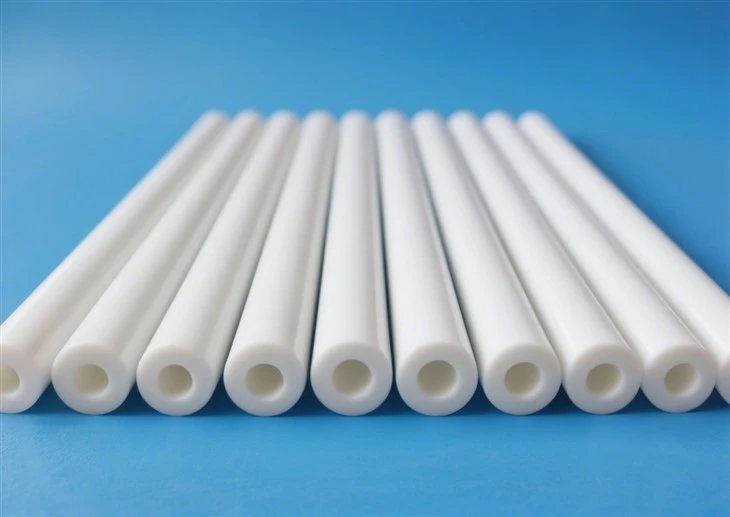
Hey there! I'm a supplier of Ceramic Roller Ceramic Roller, and today I wanna talk about how we ensure the straightness of these ceramic rollers. It's a crucial factor in the performance and quality of these products, so let's dive right in.
Understanding the Importance of Straightness
First off, why is straightness so important for ceramic rollers? Well, in many industrial applications, these rollers are used to transport materials, and any deviation from straightness can lead to uneven movement. This could cause jams, misalignments, and even damage to the materials being transported. For instance, in the glass manufacturing industry, ceramic rollers are used to move hot glass sheets. If the rollers aren't straight, the glass might not move smoothly, resulting in defects in the final product.
Raw Material Selection
The process of ensuring straightness starts right at the beginning - with the selection of raw materials. We carefully choose high - quality ceramic powders that have consistent properties. The purity and particle size distribution of these powders play a big role. If the powders have impurities or inconsistent particle sizes, it can lead to uneven shrinkage during the manufacturing process, which in turn affects the straightness of the final roller.
We work closely with our suppliers to source materials that meet our strict quality standards. We test the raw materials regularly to make sure they are up to par. For example, we use X - ray diffraction analysis to determine the crystal structure of the powders, and particle size analyzers to check the size distribution.
Precision Molding
Once we have the right raw materials, the next step is molding. We use advanced molding techniques to shape the ceramic rollers. One of the most common methods we use is extrusion. In extrusion, the ceramic powder is mixed with a binder and water to form a paste. This paste is then forced through a die of the desired shape.
During the extrusion process, we pay close attention to the pressure and speed. If the pressure is too high or too low, or if the speed is inconsistent, it can cause the roller to be misshapen. We use computer - controlled systems to monitor and adjust these parameters in real - time. This helps us ensure that the rollers are formed with high precision and have a consistent cross - section along their length.
Drying and Firing
After molding, the green (unfired) ceramic rollers need to be dried and fired. Drying is a critical step because if the rollers dry too quickly or unevenly, they can crack or warp. We use controlled drying chambers where we can regulate the temperature, humidity, and airflow. This slow and even drying process helps prevent any internal stresses from building up in the rollers.
Once the rollers are dry, they are fired in a kiln. The firing process is where the ceramic material undergoes a chemical and physical transformation, becoming hard and durable. However, firing can also cause shrinkage, and if not controlled properly, it can affect the straightness of the rollers.
We use a multi - stage firing process with carefully controlled heating and cooling rates. This helps minimize the shrinkage and ensures that the rollers maintain their shape. We also use special supports inside the kiln to keep the rollers straight during firing. These supports are designed to withstand the high temperatures and provide even support along the length of the rollers.
Quality Inspection
After firing, every single ceramic roller goes through a rigorous quality inspection. We use a variety of inspection methods to check the straightness. One of the most common methods is the use of laser measuring devices. These devices can measure the deviation from straightness with high accuracy.
We measure the rollers at multiple points along their length to get a comprehensive understanding of their straightness. If a roller doesn't meet our straightness tolerance, it is either re - worked or discarded. We also use visual inspection to look for any surface defects or cracks that could affect the performance of the roller.
Post - Processing
In some cases, even after all the above steps, a roller might still have a slight deviation from straightness. That's where post - processing comes in. We use grinding and polishing techniques to correct any minor imperfections.
Grinding is done using precision grinding machines. We use abrasive wheels to remove small amounts of material from the surface of the roller. This helps to improve the straightness and surface finish of the roller. After grinding, the rollers are polished to give them a smooth surface.
Continuous Improvement
We're always looking for ways to improve our processes and ensure even better straightness of our ceramic rollers. We invest in research and development to find new materials and techniques. For example, we're currently exploring the use of nanocomposite ceramics, which have the potential to offer better mechanical properties and dimensional stability.
We also collect feedback from our customers. If they notice any issues with the straightness of the rollers in their applications, we take that feedback seriously and use it to make improvements.
Why Choose Our Ceramic Rollers
Our commitment to ensuring the straightness of our ceramic rollers means that you can count on them for reliable performance. Whether you're in the glass industry, the steel industry, or any other industry that uses ceramic rollers, our products will meet your needs.
If you're looking for high - quality ceramic rollers with excellent straightness, don't hesitate to get in touch with us. We're here to answer your questions and help you find the right solution for your business. You can visit our website Ceramic Roller to learn more about our products and start the conversation about your procurement needs.

References
- Ceramic Engineering and Science Proceedings, various issues on ceramic manufacturing processes.
- Journal of the American Ceramic Society, articles on quality control in ceramic production.
- Industry reports on the use of ceramic rollers in different industrial applications.


