Currently, the global structural ceramics industry is accelerating its transformation towards high performance, multi-functionality, greenization, and intelligence. As the most widely used structural ceramic material, alumina ceramics have seen a continuous surge in demand across various fields such as industrial manufacturing, new energy, and semiconductors, thanks to their excellent wear resistance, high temperature resistance, corrosion resistance, and insulation properties. According to industry research data, the global alumina ceramic substrate market reached 3.23 billion US dollars in 2024 and is expected to grow to 3.46 billion US dollars in 2025, with the demand for high-end precision alumina ceramic components growing at an especially remarkable rate. As an enterprise deeply engaged in the foreign trade ceramic field for many years, TECERA, based on industry trends and relying on technological innovation, has launched the upgraded Alumina Ceramic Cube. With technological breakthroughs to solve industry pain points and precise adaptability to expand application boundaries, it has become an important force driving the high-endization and internationalization of alumina ceramic products.
The biggest innovation highlight of TECERA's newly launched alumina ceramic cubes lies in the iteration and upgrading of production processes - integrating the core advantages of the industry-leading foam precursor-derived technology and low-temperature energy-saving sintering process, breaking the industry bottleneck of "incompatibility between high hardness and high toughness" in traditional alumina ceramics. Different from the traditional dry pressing and high-temperature sintering mode, TECERA adopts the optimized particle-stabilized foam preparation process, converting alumina powder into foam precursors. After pre-sintering, crushing, and hot-pressing treatment, the uniform refinement of grains is achieved, forming a unique microstructure. Without adding additional sintering aids, the fracture mode of the product is transformed from the traditional intergranular fracture to transgranular fracture, and the comprehensive mechanical properties are greatly improved. At the same time, the introduction of flash sintering technology reduces the traditional high sintering temperature above 1600℃ to about 900℃, and shortens the sintering time from several hours to tens of seconds. This not only significantly reduces energy consumption and practices the concept of green manufacturing, but also effectively controls the dimensional accuracy of products, solving the long-standing problem of high precision processing costs plaguing the industry.
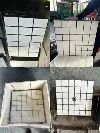
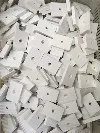
In terms of core product performance, TECERA's alumina ceramic cubes inherit the inherent advantages of alumina ceramics, while achieving breakthroughs in key indicators such as purity, hardness, and dimensional accuracy. The products cover multiple purity specifications including 92%, 95%, 99.5%, and 99.7%, which can be flexibly customized according to the needs of different industrial working conditions. Among them, the 99.7% high-purity product has a density of 3.8g/cm³, only half that of steel, which can effectively reduce equipment load; the Rockwell hardness is as high as HRA85-90, close to the hardness level of diamond, and the wear resistance is more than 200 times that of high-manganese steel and 170 times that of high-chromium cast iron, showing outstanding performance in high-abrasion material transportation scenarios; it has excellent thermal performance, with a maximum service temperature of 1800℃ and a thermal expansion coefficient controlled at 7.0-9.0×10⁻⁶/℃, which can adapt to extreme temperature difference environments; in terms of electrical properties, the volume resistivity exceeds 10¹⁴Ω·cm, and the dielectric strength reaches 8-15kV/mm, which can be stably applied in high-voltage insulation scenarios. In addition, compared with other special-shaped ceramic products, the standardized geometric design of the cube has significant installation advantages: it can be closely arranged and laid, with high construction efficiency, controllable gaps and easy cutting, adapting to various installation scenarios such as large planes and pipeline inner walls. The scrap rate is much lower than that of special-shaped products, making it particularly suitable for the standardized and large-scale supply of foreign trade bulk orders.
In terms of the expansion of industry application scenarios, TECERA's alumina ceramic cubes are closely aligned with the global manufacturing upgrading needs, achieving comprehensive coverage from traditional industries to high-end manufacturing fields, and becoming a core supporting material for equipment upgrading in multiple industries. In traditional industrial fields such as electric power, mining, and cement, the product can be used as wear-resistant liners, chute liners, and fan impeller protection components. With extremely strong wear resistance and corrosion resistance, it can extend the service life of vulnerable parts of equipment by 3-5 times, significantly reducing downtime and maintenance costs - for example, in coal washing plant cyclones and mine slurry transportation pipelines in the coal industry, its service life can be more than 10 times that of ordinary steel plates, effectively solving the problem of equipment loss caused by material scouring. In the new energy field, the product is suitable for wear-resistant liners for pole piece cutting in new energy vehicle battery production. With high hardness and dimensional accuracy, it ensures the stability of the cutting process and helps improve battery production efficiency; in the semiconductor field, the 99.7% high-purity alumina ceramic cubes can be used as chip packaging casings and insulation support components, and their excellent insulation and thermal stability meet the high integration and high precision requirements of semiconductor equipment. In addition, in fields such as laboratory equipment, chemical reaction kettles, and aerospace auxiliary components, the product has also gained wide attention from overseas customers due to its excellent comprehensive performance.
Currently, the global alumina ceramic market presents a diversified competitive pattern. International enterprises such as Maruwa and Kyocera from Japan occupy part of the high-end market. As a major producer of alumina ceramics, China's output is expected to exceed 2.343 billion pieces in 2025, with a market scale exceeding 1.33 billion yuan, indicating huge export potential for domestic high-end products. As an enterprise focusing on foreign trade ceramic exports, TECERA has always been guided by international market demand, strictly following international standards in product R&D. All alumina ceramic cubes have passed the ASTM65 test, with stable and reliable product quality. They can be customized into different sizes and purities according to the needs of overseas customers, adapting to industry standards in different countries and regions. The newly launched alumina ceramic cubes not only fill the product gap of the company in the field of precision ceramic cubes, but also break the import dependence on high-end alumina ceramic products by virtue of technological innovation and scenario adaptability, enhancing the competitiveness of Chinese ceramic products in the international market.
Industry experts said that as a basic material for modern industry, the technological innovation and application expansion of alumina ceramics are the core driving forces for the upgrading of the structural ceramics industry. TECERA's newly launched alumina ceramic cubes deeply combine cutting-edge technology with market demand, not only solving the performance pain points of traditional products, but also expanding application boundaries, which is in line with the industry trend of high performance, greenization, and standardization. In the future, TECERA will continue to increase R&D investment, focus on the process optimization and composite material development of high-purity alumina ceramics, introduce zirconia toughening technology to further improve the impact resistance of products, and expand applications in high-end fields such as semiconductors and aerospace. It will continuously improve the product system, provide more competitive alumina ceramic solutions for global customers, help China's ceramic industry move towards high-endization and internationalization, and occupy a more important position in the global structural ceramics market.